Current Affairs 19 June 2026 | 19th June 2026 Current Affairs | Daily GK Updates
A genuinely packed Friday. The biggest story of the day is the Telegram ban controversy — the government has restricted access to the messaging platform until June 22, timed deliberately around the NEET-UG re-examination, and Telegram has taken the fight to the Delhi High Court. Meanwhile PM Modi wrapped up his France visit, attending VivaTech 2026 in Paris and signing 13 outcomes with President Macron in Nice. Back home, the RBI eased capital norms for ECLGS-backed loans, MNRE launched the Green Hydrogen Certification Portal, Ladakh got its first dedicated Snow Leopard conservation society, and Jharkhand received GI tags for 11 traditional products. There's also important coverage on India's graduate employment crisis, Kerala's Nipah risk, and a fascinating new lens on Adivasi youth mental health. Let's get into it.
International Affairs & Diplomacy
PM Modi Concludes France Visit — VivaTech 2026 and 13 Key Outcomes in Nice
PM Modi's France trip wrapped up on June 18, and the outcomes are substantial enough to deserve a proper look.
The Prime Minister, alongside French President Emmanuel Macron, participated in VivaTech 2026 in Paris — Europe's largest startup and technology event — to highlight India's vision for human-centric AI and expand bilateral digital cooperation. VivaTech is hosted annually at Paris Expo Porte de Versailles and is co-organized by Publicis Groupe and Les Echos–Le Parisien. This year's edition brought together roughly 180,000 attendees, 14,000 startups, 4,000 partners, and 450 global speakers — genuinely massive scale.
India's participation strengthened innovation and startup collaboration with France. The Indian pavilion showcased scalable solutions in digital payments, agriculture, governance, and space technology, specifically pitched as relevant for developing countries — a smart positioning move given India's Global South leadership ambitions.
Before Paris, Modi held bilateral talks with Macron at Villa Kerylos in Nice — the first bilateral meeting between the two leaders since India-France ties were elevated to a "Special Global Strategic Partnership" in February 2026. The two leaders also inaugurated the inaugural edition of Bharat Innovates 2026 at the Palais des Expositions de Nice — a three-day event organised by the Ministry of Education under the India-France Year of Innovation.
The visit produced 13 key outcomes overall, including the adoption of the India-France Innovation Roadmap 2030 and the establishment of a Joint Working Group on AI Governance. Given that India is simultaneously building its own AI ecosystem through IndiaAI Mission and BharatGen, having a structured AI governance dialogue with a major European partner is a meaningful addition to India's tech diplomacy toolkit.
Wang Yi to Attend BRICS NSAs Meeting in Delhi
Chinese Foreign Minister Wang Yi is set to attend the BRICS National Security Advisers' (NSA) meeting in New Delhi — a notable development given Wang Yi's absence from the BRICS Foreign Ministers' Meeting back in May (he was attending Trump's state visit to China instead). His presence at the NSA-level meeting suggests Beijing is recalibrating its level of engagement with India's BRICS Chairship as the September Leaders' Summit approaches.
Alongside this, India's Consul General has been actively pitching investment opportunities to Chinese business leaders in Shanghai — a reminder that even amid strategic competition, India-China economic engagement continues at the commercial level.
Governance & Internal Security
Telegram Banned Till June 22 — Government Calls It the "New Dark Web"
This is the headline story of the day, and the legal arguments being made are worth understanding in detail.
The Union government told the Delhi High Court that the messaging platform Telegram has evolved into the "new dark web" — arguing that its architecture and privacy features have made it a preferred tool for cybercriminals, fraud networks, extremist and terror groups, and operators involved in examination paper leaks. Solicitor General Tushar Mehta, appearing for the Centre, relied heavily on an Indian Cyber Crime Coordination Centre (I4C) assessment that the platform was a growing hub for illicit online activity.
The government has restricted access to Telegram till 22 June 2026 under Section 69A of the Information Technology Act, 2000 — and the timing is not accidental. This ban is specifically timed ahead of the NEET-UG re-examination, designed to prevent another paper leak through encrypted Telegram channels — exactly the kind of breach that compromised the original NEET-UG 2026 exam back in May.
Telegram has challenged the ban before the Delhi High Court, and judgment has been reserved.
Understanding Section 69A — what's actually at stake: Section 69A empowers the Union government to block public access to any information via any computer resource, but only on six specified grounds — sovereignty and integrity of India, defence of India, security of the State, friendly relations with foreign States, public order, or preventing incitement to the commission of any cognizable offence. It's a fairly narrow list, deliberately so, given the seriousness of restricting access to a communication platform.
Blocking orders under this section must follow the Information Technology (Procedure and Safeguards for Blocking Access to Information by the Public) Rules, 2009 — which involve a designated officer, a review committee, and recorded reasons. Beyond the statutory process, such orders must also satisfy the proportionality test laid down by the Supreme Court: necessity, least restrictive alternative, and openness to judicial review. This is the legal battleground Telegram's lawyers will be fighting on — whether a blanket ban genuinely meets the "least restrictive alternative" standard, or whether more targeted measures (blocking specific channels, say) would have sufficed.
There's also a connected question around Section 79 of the IT Act, which establishes intermediary "safe harbour" — platforms aren't liable for third-party content as long as they exercise due diligence and comply with government takedown requests. The government's argument essentially positions Telegram as having forfeited this protection by enabling, rather than curbing, illegal activity at scale.
Economy & Finance
RBI Eases Capital Norms for Banks Under ECLGS 5.0
A quieter but genuinely important banking sector update.
The Reserve Bank of India relaxed capital requirements for banks on loans backed by the Emergency Credit Line Guarantee Scheme (ECLGS 5.0), through an amendment to the RBI (Commercial Banks – Prudential Norms on Capital Adequacy) Directions, 2025, with immediate effect.
Under the revised norms, 75% of the guaranteed portion now attracts zero risk weight, while the remaining 25% continues to attract 20% risk weight — and the 0% risk weight is conditional on banks settling claims within 30 days of invocation. In plain terms: banks now need to set aside less capital against ECLGS-backed loans, which frees up lending capacity at a moment when credit support to stressed businesses matters.
Context worth remembering — ECLGS was originally launched in May 2020 as part of the Atmanirbhar Bharat COVID-19 relief package. ECLGS 5.0 itself was approved by the Union Cabinet in June 2026 specifically to support businesses affected by the West Asia conflict — connecting this story directly to the broader energy and trade disruption narrative that's been running through India's economic policy all through May and June. The scheme is administered by the National Credit Guarantee Trustee Company (NCGTC) under the Ministry of Finance.
RBI's Growing Fiscal Role — A Quiet but Significant Shift
There's a broader institutional story developing here too — analysts are increasingly flagging that the RBI's role has expanded well beyond traditional monetary policy into what's effectively fiscal territory. Between the record dividend transfer to government (₹2,86,588.46 crore, covered in our May 23 edition), active forex market intervention to defend the rupee, and now capital relief measures supporting government-guaranteed lending schemes, RBI's footprint in fiscal-adjacent decisions has grown considerably through 2026.
This raises a genuine policy question for GS Paper III: how much of this expanded role is structurally necessary given the scale of the current economic stress (West Asia energy shock, widening trade deficit, declining forex reserves), and how much risks blurring the institutional separation between monetary and fiscal policy that India's macroeconomic framework has traditionally maintained.
On the Economic Capital Framework (ECF) — a fact worth getting precisely right: Under the ECF, the RBI is required to maintain a Contingent Risk Buffer (CRB) of between 4.5% and 7.5% of its total balance sheet size. This is distinct from two other commonly confused metrics — the Contingency Fund (Realised Equity), which operates on a 5.5%–6.5% range, and the broader Capital & General Risk Account (CGRA), which spans 20.8%–25.4%. These three numbers get mixed up constantly in exam prep material, so it's worth sitting with the distinction until it's locked in.
Centre to Raise ₹13,000 Crore via OFS in Three State-Run Banks
The government plans to raise around ₹13,000 crore through an Offer for Sale (OFS) in three public sector banks — Punjab & Sind Bank, UCO Bank, and Indian Overseas Bank — to meet the minimum public shareholding norms prescribed by SEBI. These three banks have had government holding well above the 75% ceiling SEBI mandates for listed companies, and this OFS is the disinvestment route to bring holdings into compliance.
India's Direct Tax Collections Rise Over 14%
India's direct tax collections have risen by more than 14% — driven largely by strong advance tax payments from corporations. This points to robust corporate earnings and a generally positive business outlook for the current fiscal year, with healthy market activity also contributing to revenue. The collections have resumed their growth trajectory after the disruptions of the previous year — a small but meaningful signal of underlying economic resilience even as the rupee and trade deficit headlines have dominated recent news.
Environment & Conservation
World Day to Combat Desertification and Drought — WDC-PMKSY 2.0 in Focus
The World Day to Combat Desertification and Drought was observed on June 17, 2026, across 813 project areas under the Watershed Development Component of the Pradhan Mantri Krishi Sinchayee Yojana (WDC–PMKSY 2.0). The observance fell a couple of days before this current affairs cycle but remained in active discussion through June 19.
This connects neatly with several themes we've been tracking through May and June — India's groundwater crisis (covered in detail back in May 9 and May 19), the Tigris-Euphrates basin comparison, and the broader question of how India balances agricultural water demand against a rapidly depleting aquifer system, particularly across the Indo-Gangetic Plain.
Ladakh Gets Its First Dedicated Snow Leopard Conservation Society — SHAN
A genuinely heartening conservation story out of one of India's most fragile high-altitude ecosystems.
Ladakh's Lieutenant Governor Vinai Kumar Saxena approved the constitution of the "Snow Leopard and High-Altitude Nature" (SHAN) Conservation Society in Ladakh — the first institutional mechanism of its kind in the region. The Society, operating under the Department of Environment and Forests, Ladakh, will function as a dedicated body for wildlife conservation, biodiversity management, and community-led environmental stewardship.
Why this matters beyond the headline: the snow leopard is the State Animal of Ladakh and a keystone species of the Trans-Himalayan ecosystem — often poetically called the "Ghost of the Mountains" because of how rarely it's spotted despite its presence. According to the 2024 Snow Leopard Population Assessment, India has 718 snow leopards, and a remarkable 477 of them — nearly two-thirds — are found in Ladakh alone. India's broader Project Snow Leopard was launched back in 2009, but SHAN is the first body specifically dedicated to Ladakh's high-altitude conservation, with an explicit mandate to also promote eco-development and eco-tourism in snow leopard habitats — recognising that conservation in a region this remote needs to work hand-in-hand with local livelihoods, not against them.
New Study — Vast Stretches of Coral Reefs Could Resist Climate Change
A piece of genuinely hopeful environmental science emerged today. New research suggests that significant portions of the world's coral reefs may be more resilient to climate change than previously assumed — with certain reef ecosystems showing adaptive capacity that could allow them to survive ocean warming and acidification better than earlier models predicted. While the full picture remains complex (most reef systems still face severe stress), the finding adds nuance to the otherwise grim narrative around global coral bleaching events.
Jharkhand Receives GI Tags for 11 Traditional Products
Jharkhand secured Geographical Indication tags for 11 traditional products — a significant cultural and economic recognition for the state's tribal and artisanal heritage. GI tags protect the authenticity of region-specific products, prevent imitation, and open doors to premium pricing and export opportunities — similar to how Darjeeling Tea and Bomkai weaving (Odisha) have benefited from GI protection, as we covered in earlier editions.
Infrastructure
Final Revival — A 25-Year-Delayed Railway Project Gets Moving
A railway project that's been stuck for over two decades finally has a construction roadmap.
After navigating decades of land acquisition disputes and procedural hurdles, the project was officially accelerated in June 2026 with an updated construction roadmap now managed by Northern Railway. The corridor is a 39.68-kilometre broad-gauge layout, built to modern weight-bearing and high-speed safety parameters, with an estimated financial outlay of approximately ₹1,400 crore.
The construction plan includes two new crossing stations at Ghuman and Butala to manage dual-direction traffic, plus a substantial civil engineering effort — 11 major bridges, 121 minor bridges, and 54 Road Under Bridges (RUBs) to ensure smooth crossing over local water channels and roads. Critically, the line will be fully fitted with Kavach, India's indigenous Automatic Train Collision Avoidance System, alongside advanced digital signalling and telecommunication infrastructure — making it one of the first new lines to be Kavach-ready from the construction stage itself, rather than retrofitted later.
NCRPB Approves Four 'Namo Cities' in Delhi-NCR
The National Capital Region Planning Board (NCRPB), chaired by Union Minister Manohar Lal Khattar (Ministry of Housing and Urban Affairs), approved plans to develop four greenfield cities across the National Capital Region — one each in Delhi, Haryana, Uttar Pradesh, and Rajasthan. These will be branded as "Namo Cities" and developed under the Regional Plan 2041, with the explicit goal of promoting balanced regional growth across the NCR rather than concentrating development pressure entirely on Delhi itself.
Gujarat Secures Long-Term Credit Lines for Ahmedabad Metro and Dholera SIR
The Government of Gujarat signed an MoU establishing credit lines valid for two years, with effect from May 2026 on a retrospective basis. The long-term funding will support several key development projects — Ahmedabad Metro Rail Phases 2 and 3, expressways, sports infrastructure, and world-class urban development with the Dholera Special Investment Region (SIR) — the project we've tracked through the Ahmedabad-Dholera Semi High-Speed Rail story back in May.
Separately, the Gujarat government also signed an MoU with IIM Ahmedabad to provide technical and strategic support for infrastructure projects under the Viksit Gujarat 2047 programme.
Energy
MNRE Launches Green Hydrogen Certification Portal of India
Union Minister Pralhad Joshi (Ministry of New and Renewable Energy) launched the Green Hydrogen Certification Portal of India (GHCI Portal) during a National Workshop on "Strengthening the National Green Hydrogen Mission: Through State Policies, Hubs & Infrastructure" held in New Delhi.
The GHCI Portal is a unified digital platform developed by MNRE to administer the Green Hydrogen Certification Scheme — enabling measurement, reporting, verification, certification, regulatory compliance, transparency, and credibility across India's emerging green hydrogen sector. Certification is mandatory for any producer receiving incentives or subsidies, selling or using green hydrogen domestically, obtaining exemptions, or exporting partial quantities. The portal itself is scheduled to become fully operational from July 1, 2026, once a pending security audit is completed.
This connects directly to the India-EU green hydrogen cooperation and the India-Norway Green Strategic Partnership we covered back in May — India is clearly building out the regulatory backbone needed to make green hydrogen a credible, internationally tradeable commodity rather than just a policy aspiration.
Society & Public Health
Is India Producing More Graduates Than the Economy Can Absorb?
A question that deserves more attention than it usually gets in current affairs coverage — and one with serious GS Paper II implications around education policy and employment generation.
India now produces several million graduates annually, but a growing body of analysis suggests the formal economy simply isn't generating white-collar jobs at a matching pace. The mismatch is particularly acute for graduates from tier-2 and tier-3 institutions, where degree credentials increasingly fail to translate into employability — a gap that's been termed India's "educated unemployment" problem for decades but appears to be intensifying as the sheer volume of graduates grows.
This ties into broader questions we've touched on throughout this current affairs series — India's low GERD (Gross Expenditure on R&D, at just 0.65% of GDP, covered in our May 21 edition), the structural skew of formal job creation toward a handful of sectors (IT, financial services), and the continuing dominance of the unincorporated, informal sector (now at 9.16 crore establishments per the latest QBUSE data, covered May 22) as the actual absorber of India's labour force growth.
What Is Kerala's Risk Profile for Nipah?
Kerala has, unfortunately, become something of a recurring case study in India's Nipah virus management — having dealt with multiple outbreaks since 2018. Current health surveillance discussions are examining what makes Kerala specifically susceptible: its dense human-bat interface (particularly around fruit bat roosting areas), high population density in affected districts, and a well-documented history of zoonotic spillover events in the Kozhikode-Malappuram corridor.
Nipah is a zoonotic virus transmitted primarily through fruit bats (the natural reservoir), with a case fatality rate that can range from 40% to 75% depending on the outbreak and healthcare response — making it one of the more lethal pathogens India actively monitors. Kerala's experience has actually made it something of a model for rapid containment protocols nationally — its track record of swift contact tracing and containment zone implementation has been studied as a template for other states facing emerging zoonotic threats.
Beyond 'Depression' and 'Anxiety' — How Young Adivasis Describe Distress
A genuinely important and underexplored piece of social science emerged in current affairs discussions today — research examining how tribal youth in India articulate mental health distress, often in vocabularies that don't map neatly onto Western clinical categories like "depression" or "anxiety."
The finding has real policy implications. India's mental health infrastructure — built largely around Western diagnostic frameworks under the Mental Healthcare Act, 2017 — may be systematically failing to recognise or respond to distress as it's actually experienced and described within Adivasi communities, where emotional and psychological struggle is often expressed through culturally specific idioms tied to land, displacement, community rupture, and spiritual frameworks rather than standard clinical terminology.
This connects to a broader thread we've followed through this series — the legitimate historical grievances of tribal communities (Veer Gundadhur's Bhumkal Revolt, covered May 20; the Forest Rights Act as partial redress) and the question of whether India's development and welfare apparatus genuinely understands tribal lived experience, or simply imposes mainstream frameworks onto fundamentally different cultural contexts.
Defence
Exercise Pitch Black 2026 — IAF Joins Multinational Air Combat Exercise in Australia
The Indian Air Force is participating in Exercise Pitch Black 2026, a large-scale multinational air combat exercise hosted in Australia. Pitch Black is one of the world's most significant air warfare exercises, typically drawing participation from a wide coalition of air forces for advanced combat training, including offensive counter-air, defensive counter-air, and strike package operations in complex, contested airspace scenarios.
India's continued participation in such exercises reflects the deepening defence engagement under the Comprehensive Strategic Partnership with Australia and India's broader Indo-Pacific military diplomacy — fitting into the same strategic logic we've seen play out through Exercise PRAGATI (Meghalaya, covered May 22), the Indian Army's debut at US SOF Week, and India's expanding network of multilateral defence exercises across the region.
Education
QS World University Rankings 2027 — IIT Delhi's Performance
The QS World University Rankings 2027 have generated fresh discussion around IIT Delhi's global standing — part of the broader, recurring conversation about how Indian institutions perform on international ranking metrics relative to their global peers, and what structural factors (research output, faculty-student ratios, international collaboration, citation impact) continue to constrain Indian universities from breaking into the very top tier dominated by US and UK institutions.
Global Startup Ecosystem Report (GSER) 2026
The Global Startup Ecosystem Report 2026 has also been in focus, offering fresh data on how Indian startup hubs — Bengaluru, Delhi-NCR, Mumbai — stack up globally in terms of funding, talent density, and ecosystem maturity, against the backdrop of India's continuing push to position itself as a genuine alternative to established Western and Chinese tech hubs.
Corporate & Markets
NSE Launches 11 New Indices
The National Stock Exchange (NSE) has launched 11 new indices, expanding the toolkit available to fund managers and investors for benchmarking and product development — part of the continuing maturation of India's capital markets infrastructure as domestic institutional participation and retail investor numbers both keep climbing.
Mukesh Ambani's AGM Challenge — RIL Seeks Fresh Momentum After ₹1.5 Lakh Crore Wealth Wipeout
Reliance Industries Chairman Mukesh Ambani faces real shareholder scrutiny heading into the company's Annual General Meeting, following a roughly ₹1.5 lakh crore decline in market capitalisation. Investors are seeking clarity on several fronts — the timeline for the much-anticipated Jio IPO, the company's AI monetisation strategy, and progress on new energy ventures — with the market looking for fresh triggers to revive sentiment amid otherwise steady underlying earnings growth.
GIC Re Gets New CMD
Insurance sector watchers will want to note a fresh leadership appointment at GIC Re (General Insurance Corporation of India) — the state-owned reinsurance major — with a new Chairman and Managing Director taking charge, a development relevant to anyone tracking India's insurance and reinsurance sector governance.
Important Day
World Day to Combat Desertification and Drought
We touched on this earlier in the environment section, but it's worth restating as a standalone observance: the day is marked globally to raise awareness about land degradation and drought, and India's domestic observance through 813 WDC-PMKSY 2.0 project areas demonstrates a genuinely operational, ground-level translation of an international awareness day into actual watershed development work — rather than just symbolic recognition.
FAQs — 19 June 2026 Current Affairs
Q. Why has the government banned Telegram and until when?
The government has restricted access to Telegram in India until June 22, 2026, under Section 69A of the IT Act, 2000. The Centre argued before the Delhi High Court that Telegram has become the "new dark web," citing an I4C assessment that the platform is being used by cybercriminals, fraud networks, and operators involved in examination paper leaks. The timing is deliberate — the ban runs through the NEET-UG re-examination period to prevent another leak via encrypted Telegram channels. Telegram has challenged the order in court, and judgment has been reserved.
Q. What were the key outcomes of PM Modi's France visit?
PM Modi attended VivaTech 2026 in Paris and held bilateral talks with President Macron at Villa Kerylos in Nice — the first such meeting since India-France ties were elevated to a "Special Global Strategic Partnership" in February 2026. The two leaders inaugurated Bharat Innovates 2026 in Nice and produced 13 outcomes overall, including the India-France Innovation Roadmap 2030 and a new Joint Working Group on AI Governance.
Q. What changed in RBI's capital norms for ECLGS 5.0 loans?
The RBI relaxed capital requirements so that 75% of the guaranteed portion of ECLGS 5.0-backed loans now attracts zero risk weight (down from higher requirements), with the remaining 25% at 20% risk weight. The zero risk weight is conditional on banks settling claims within 30 days of invocation. This frees up bank capital for further lending, particularly relevant given ECLGS 5.0 was approved specifically to support businesses hit by the West Asia conflict.
Q. What is the SHAN Conservation Society in Ladakh?
SHAN (Snow Leopard and High-Altitude Nature) Conservation Society is Ladakh's first dedicated institutional mechanism for snow leopard and high-altitude ecosystem conservation, approved by LG Vinai Kumar Saxena. It operates under Ladakh's Department of Environment and Forests. Of India's 718 snow leopards (2024 assessment), 477 — nearly two-thirds — are found in Ladakh, making this a significant conservation development for the species, often called the "Ghost of the Mountains."
Q. What is the Economic Capital Framework and the correct CRB range?
Under RBI's Economic Capital Framework, the Contingent Risk Buffer (CRB) must be maintained between 4.5% and 7.5% of RBI's total balance sheet. This is distinct from the Contingency Fund (Realised Equity), which ranges between 5.5% and 6.5%, and the broader Capital & General Risk Account (CGRA), which spans 20.8% to 25.4%. These three figures are commonly confused in exam preparation and are worth memorising precisely.
Q. What is the Green Hydrogen Certification Portal of India (GHCI)?
Launched by Union Minister Pralhad Joshi (MNRE), the GHCI Portal is a unified digital platform for measurement, reporting, verification, and certification of green hydrogen production and use in India. Certification is mandatory for producers receiving subsidies, exporting hydrogen, or claiming exemptions. The portal becomes fully operational from July 1, 2026, after a pending security audit.
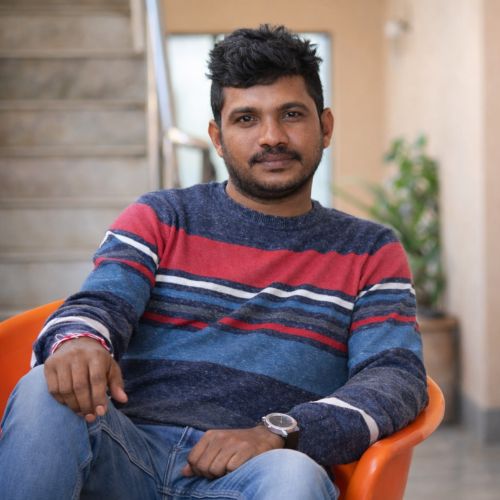
Written by
Koti Deva
Digital Marketing Specialist
Koti is a Digital Marketing Specialist with over 10 years of experience and the co-founder of MCQ Orbit — a free exam prep platform built for Indian competitive exam aspirants.
With strong personal knowledge in Quantitative Aptitude, Logical Reasoning, and Mathematics, Koti has a deep understanding of what it takes to crack exams like SSC CGL, IBPS PO, SBI Clerk, UPSC Prelims, NEET, and JEE. Having followed these exams closely for years, he understands the exact topics, patterns, and shortcuts that matter most.
MCQ Orbit was born from a simple desire — to build a platform where every aspirant in India can practice quality MCQs, read reliable current affairs, and prepare confidently, without paying a rupee. Koti combines his digital expertise with his passion for competitive exams to create content that is accurate, practical, and genuinely useful for students.
His mission is straightforward: if the right guidance had been freely available earlier, more students would have cracked their dream exams. MCQ Orbit is his way of making that happen.
Comments
No comments yet.