Current Affairs 3 July 2026 | 3rd July 2026 Current Affairs | Daily GK Updates

July 3, 2026 was a genuinely significant day — and if you're preparing for any competitive exam, there's a lot here that deserves your full attention. The biggest story is the 16th India-Japan Annual Summit, where both nations signed their first-ever defence co-development agreement — a landmark in the history of bilateral ties. At home, VB-G RAM G Act came into force on July 1 replacing MGNREGA after two decades, and July 3 saw its first full operational review. NPCI partnered with HSBC India and JP Morgan for real-time cross-border UPI settlements. Skyroot Aerospace's Vikram-1 rocket became the talk of India's private space sector. Himachal Pradesh jumped from 9 to 17 GI tags in a single announcement. The EPF Scheme 2026 replaced the 1952 scheme. And International Plastic Bag Free Day was observed globally. Let's break down every story that matters.
International Affairs
16th India-Japan Annual Summit — PM Modi and PM Sanae Takaichi in New Delhi
If you had to pick one story from July 3, 2026 that will appear in competitive exams for the next two years, this is it. The 16th India-Japan Annual Summit was held in New Delhi on July 2-3, with Japanese Prime Minister Sanae Takaichi making her first official State Visit to India.
The headline outcome is historic — both nations signed their first-ever Defence Co-Development Agreement. This means India and Japan will jointly design, develop, and potentially manufacture defence equipment — going far beyond the existing framework of Japan simply selling technology to India. Think joint research, shared intellectual property, and co-production — the kind of arrangement India has with Russia on BrahMos but deeper in technology transfer terms.
Why does this matter so much? Japan has some of the world's most advanced defence technology — including naval systems, precision electronics, and advanced materials — that India urgently needs as it modernises its armed forces. And Japan, increasingly concerned about China's aggressive posture in the East and South China Sea, wants a stronger partner in the Indo-Pacific. India and Japan need each other, and this summit formalized that reality in the most concrete terms yet.
Beyond defence, the summit produced several other significant outcomes. The two countries reaffirmed their commitment to the India-Japan Industrial Competitiveness Partnership — covering semiconductor supply chains, clean energy, and digital infrastructure. The Mumbai-Ahmedabad Bullet Train project (built on Japanese Shinkansen technology with JICA financing of ₹88,000 crore at 0.1% interest) was also reviewed, with the 2027 high-speed rail link completion confirmed as a joint priority. Strategic petroleum stockpiling and critical mineral supply chain cooperation were also on the agenda — both directly relevant to India's energy security concerns following the West Asian crisis.
The India-Japan relationship — context every aspirant needs: The bilateral relationship was elevated to a Special Strategic and Global Partnership in 2014 during PM Modi's first term. Japan is one of India's largest ODA (Official Development Assistance) providers, and the two nations are both members of the Quad alongside the USA and Australia. India and Japan share concerns about China's assertiveness in the Indo-Pacific — making this partnership as strategic as it is economic.
Gulf of Aden — Why It's Central to Global Trade Right Now
The strategic importance of the Gulf of Aden featured prominently in international affairs analysis on July 3 — particularly in the context of India's trade and energy security.
The Gulf of Aden connects the Red Sea to the Arabian Sea — it is the maritime corridor through which ships travel from Asia to Europe via the Suez Canal. If you're shipping anything from Mumbai to Rotterdam, your cargo goes through the Gulf of Aden. At its narrowest, the Gulf separates Yemen (north) and Somalia (south) — and Yemen's Houthi movement has been targeting commercial vessels here since late 2023, prompting the EU to launch Operation Aspides and the US to lead Operation Prosperity Guardian to protect shipping.
For India specifically, the Gulf of Aden matters because a significant portion of India's exports to Europe travel this route — and disruption forces ships to take the much longer route around the Cape of Good Hope, adding 10-14 days and significant fuel costs. With the West Asian crisis continuing to pressure energy prices, keeping the Gulf of Aden corridor functional is an economic priority for India.
Governance & Policy
VB-G RAM G Comes Into Force — India's Rural Employment Framework Transformed
The Viksit Bharat – Guarantee for Rozgar and Ajeevika Mission (Gramin) Act, 2025 came into operational effect from July 1, 2026 — replacing the Mahatma Gandhi National Rural Employment Guarantee Act (MGNREGA), 2005 after exactly two decades. July 3 saw the government's first formal operational review of the transition across states.
The Union Government notified an interim allocation of ₹95,692.31 crore to states and union territories to ensure an uninterrupted transition — the largest single rural employment allocation in India's history. A national launch event was held in Andhra Pradesh.
What has actually changed on the ground? Several things that matter a great deal. For the first time, India now has a nationwide minimum wage floor of ₹300 per day under a rural employment guarantee — up from varying state-level rates under MGNREGA. The maximum employment guarantee has increased from 100 days to 125 days per household per year. Wage payments must now be made within 14 days of work performed — a stricter accountability standard than existed before.
The funding model has also shifted significantly. Under MGNREGA, the Centre paid 100% of wages. Under VB-G RAM G, the funding is split 60:40 between Centre and States for normal states — meaning state governments now have more financial stake in the programme's outcomes, which theoretically incentivises better implementation but also puts pressure on fiscally weaker states.
One other important detail that the July 3 review flagged — an aggregated blackout period of 60 days during peak agricultural season is allowed under the new Act, during which states can suspend VBGRAMG works. This is meant to prevent competition with farm labour markets during sowing and harvesting seasons — but critics worry it could leave rural workers without a safety net precisely when they most need it.
EPF Scheme 2026 Replaces the 1952 Scheme — Social Security Modernised
Here's a story that affects nearly every salaried employee in India — and is highly likely to appear in Banking and SSC exams.
The Employees' Provident Funds (EPF) Scheme, 2026 has been notified under the Code on Social Security, 2020, formally replacing the Employees' Provident Funds Scheme, 1952 that had governed India's provident fund system for 74 years. The nodal ministry is the Ministry of Labour and Employment, and implementation authority rests with the Employees' Provident Fund Organisation (EPFO).
What does this mean in practice? The core purpose remains the same — providing financial security and retirement savings for employees. But the new scheme modernises the administrative framework significantly. It integrates EPF administration with India's broader Code on Social Security, 2020 — which consolidates 29 existing labour laws into a unified framework covering wages, social security, industrial relations, and occupational safety. The digital infrastructure behind EPF — including the Universal Account Number (UAN) system and e-KYC linkage — is strengthened under the new framework.
Critically for existing subscribers — no disruption to accumulated balances. Existing EPF subscribers automatically continue as members under the new scheme, with no fresh enrolment or transfer required. Their money is safe and continues to earn interest.
Updated Crèche Guidelines — Response to Bengaluru Daycare Abuse Case
The government released updated national crèche guidelines on July 3 — a direct policy response to the severe abuse of toddlers at the 'Little Buds Day Care' facility on the Capgemini campus in Brookefield, Bengaluru, which had sparked intense public outrage earlier in the year.
The updated guidelines strengthen several areas that the Bengaluru case exposed as dangerously inadequate. Background verification of all crèche staff — including caregivers, helpers, and security personnel — is now made mandatory, not optional. Real-time CCTV access for parents to monitor daycare facilities remotely is being pushed as a minimum standard. Labour law compliance — including proper employment contracts for crèche workers — is strengthened.
The 2024 national crèche protocol had already laid out a structural framework, but the Bengaluru case showed the gap between policy on paper and implementation on the ground. Weak inspection tracking and widespread avoidance of compliance norms meant that facilities operating in corporate campuses, where working parents have few alternatives, were not being adequately monitored.
Crèche regulation in India falls under the Maternity Benefit (Amendment) Act, 2017 — which made it mandatory for establishments with 50 or more employees to provide crèche facilities. The updated 2026 guidelines add teeth to this requirement.
Digital India Celebrates 11 Years — MeitY's Milestone
Digital India — the flagship programme to transform India into a digitally empowered society and knowledge economy — completed 11 years on July 1, 2026, with the anniversary being celebrated through the first week of July.
Launched on July 1, 2015 by PM Modi, Digital India was built around nine pillars — from broadband highways and universal phone connectivity to e-governance and electronics manufacturing. Eleven years later, the numbers tell a remarkable transformation story. India now has over 900 million internet users, the world's cheapest mobile data, a UPI system processing over 1,000 crore transactions monthly, and 130 crore Aadhaar holders. BharatNet has connected over 2 lakh Gram Panchayats with optical fibre.
The programme is now pivoting toward semiconductor self-reliance and AI development — with the India Semiconductor Mission and IndiaAI Mission (₹10,372 crore) representing its next phase. The ministry responsible — Ministry of Electronics and Information Technology (MeitY) — also announced that the programme will expand its focus to cybersecurity infrastructure and quantum computing research in its next phase.
Economy & Finance
NPCI Partners HSBC India and JP Morgan for Real-Time Cross-Border UPI
This is the kind of story that appears in Banking Awareness sections almost every exam cycle.
The National Payments Corporation of India (NPCI) partnered with HSBC India and JP Morgan Payments to enable real-time Foreign Exchange (FX) settlement for cross-border UPI transactions. Under this arrangement, HSBC India acts as the banking partner providing real-time FX rates through direct API integration, while JP Morgan — the world's largest bank by market capitalisation — handles real-time FX conversion and settlement across multiple currencies.
What does this actually mean for ordinary users? When an Indian in Singapore sends money home via UPI, or when an Indian tourist in Paris pays at a restaurant through a UPI-linked app, the currency conversion and settlement currently happens with some delay. This new partnership makes it real-time — the conversion happens instantly, at live market rates, with settlement completed immediately. For a country where remittances exceed $137 billion annually (India is the world's largest remittance recipient), faster and cheaper cross-border settlement is economically significant.
NPCI — for those unfamiliar: The National Payments Corporation of India is a not-for-profit entity established in 2008 under the Payment and Settlement Systems Act, 2007, promoted by the Reserve Bank of India (RBI) and the Indian Banks' Association (IBA). It is the umbrella organisation for all retail payment systems in India — operating UPI, IMPS, RuPay, FASTag, and more.
Bank of Baroda and Mizuho Bank Sign MoU — India-Japan Banking Ties Deepen
Riding on the momentum of the India-Japan Summit, Bank of Baroda and Mizuho Bank of Japan signed a strategic MoU on July 3. The partnership aims to enhance trade finance, project finance, and treasury services for businesses operating across both countries — particularly relevant for Japanese companies investing in India under the India-Japan Industrial Competitiveness Partnership.
Mizuho is one of Japan's three megabanks (alongside MUFG and SMBC). The partnership makes Bank of Baroda — one of India's major public sector Navratna banks — a preferred banking partner for Japanese corporate operations in India.
Science & Technology
Skyroot Aerospace's Vikram-1 — India's Private Orbital Rocket in Focus
Skyroot Aerospace — a Hyderabad-based private space startup — brought its Vikram-1 orbital rocket into sharp focus this week, as the company announced a timeline for its next commercial launch and revealed new payload capacity specifications.
Vikram-1 is significant for a straightforward reason — it is India's first privately developed orbital-class launch vehicle. Not a sounding rocket, not a suborbital hop — a full orbital rocket capable of placing satellites into Low Earth Orbit (LEO). Skyroot became the first private Indian company to launch a rocket into space with the suborbital Vikram-S in November 2022 — Vikram-1 is the natural next step.
The rocket is named after Dr. Vikram Sarabhai — the father of India's space programme — and is designed to serve the rapidly growing small satellite market. With global demand for small satellite launches booming (driven by IoT, earth observation, and communications constellations), Vikram-1 enters a market where cost and launch frequency are the key competitive dimensions.
Why private space matters for India: India's Space Policy 2023 opened the entire space value chain — launch vehicles, satellites, ground stations, and space data services — to private companies. IN-SPACe (Indian National Space Promotion and Authorisation Centre) is the regulatory body that facilitates private space activity. Skyroot, along with Agnikul Cosmos (which developed the world's first single-piece 3D-printed rocket engine), represents India's NewSpace generation.
Borjuli Wetland Gets Biodiversity Heritage Site Status — Assam
The Borjuli Wetland in Assam was officially designated a Biodiversity Heritage Site (BHS) — a recognition that carries both conservation and legal protection significance.
Borjuli is located in the Biswanath district of Assam — in the flood plains of the Brahmaputra river system. The wetland is ecologically rich — hosting migratory birds, freshwater fish species, and aquatic vegetation that forms an important part of Assam's riverine biodiversity corridor. Its designation as a BHS under the Biological Diversity Act, 2002 means that the local biodiversity management committee and the state government have committed to protecting it from encroachment, unsustainable exploitation, and development pressure.
What is a Biodiversity Heritage Site? Under Section 37 of the Biological Diversity Act, 2002, state governments can notify areas of ecological, biodiversity, and cultural significance as Biodiversity Heritage Sites. These are distinct from national parks and wildlife sanctuaries — they focus specifically on biodiversity richness and traditional ecological knowledge associated with the area. Local communities play a central role in their governance.
ICC Releases Return to Play Post-Pregnancy Guidelines for Women Cricketers
The International Cricket Council (ICC) released its 'Return to Play Post-Pregnancy Guidelines' — a framework to support women cricketers in safely returning to professional cricket after pregnancy and childbirth.
This is a first-of-its-kind framework in cricket governance — reflecting the ICC's acknowledgment that women's cricket has grown to a professional level where athletes' career continuity matters beyond just performance metrics. The guidelines cover physical rehabilitation timelines, mental health support, and contractual protections — ensuring that a woman cricketer who takes maternity leave is not disadvantaged in terms of central contracts, ranking points, or selection eligibility.
The ICC — headquartered in Dubai, UAE, founded in 1909 — has been progressively strengthening women's cricket governance, culminating in equal match fees for men and women in ICC events (announced 2022) and now this landmark welfare framework.
Environment & Conservation
International Plastic Bag Free Day — July 3
Every July 3, the world observes International Plastic Bag Free Day — a campaign to raise awareness about reducing single-use plastic bag consumption and its devastating impact on marine ecosystems, wildlife, and human health.
Plastic bags are among the most pervasive forms of plastic pollution on Earth. They take 500-1,000 years to decompose, break down into microplastics that enter food chains, and are responsible for the deaths of an estimated 100,000 marine animals annually. India generates approximately 9.4 million tonnes of plastic waste annually — of which a significant proportion comes from single-use plastics including bags.
India made a bold move on July 1, 2022, when it banned single-use plastics including plastic bags below 75 microns thickness — under the Plastic Waste Management Rules, 2016 (amended 2021). However, enforcement has been patchy — particularly in smaller towns and rural markets where alternatives are limited and awareness is low. The July 3 observance is a reminder that legislation alone is insufficient without behavioural change and affordable alternative supply chains.
Globally, the UN Environment Assembly has been working toward a Global Plastics Treaty — a binding international agreement to end plastic pollution, with negotiations expected to conclude in 2026. India has been an active participant in these negotiations.
Rankings & Reports
India Climbs to 94th in SDG Index 2026 — But Trails Neighbours on Key Indicators
The Sustainable Development Report 2026 — published by the UN Sustainable Development Solutions Network (SDSN) at the Hamburg Sustainability Conference — ranked India at 94th among all nations on SDG achievement. This represents a significant improvement from India's 112th rank in 2015 when the SDGs were first adopted — an 18-place climb over 11 years.
But here's what makes this more nuanced than it first appears. Despite the overall improvement, India still trails its South Asian neighbours — Bhutan, the Maldives, Nepal, and Sri Lanka — on the composite index. For the world's most populous country and the 5th largest economy, this gap is both a policy challenge and an exam-relevant data point.
India's worst-performing SDG indicator is the Press Freedom Index — which fell from 59.51 in 2015 to 31.96 in 2026 (India ranked 157th on RSF's index, as covered in our May 19 current affairs). India's only on-track SDG 2 indicator is cereal yield at 3.6 tonnes per hectare. Areas of notable progress include electricity access (SDG 7) and mobile broadband/internet penetration (SDG 9).
Himachal Pradesh GI Tags Jump from 9 to 17
Himachal Pradesh saw its total GI (Geographical Indication) tagged products jump from 9 to 17 following the latest round of registrations in July 2026 — nearly doubling the state's portfolio of protected traditional products.
GI tags protect the unique identity of products that have a specific geographical origin and qualities or reputation linked to that origin. For Himachal Pradesh — which produces distinctive handicrafts, food products, and agricultural goods rooted in its Himalayan culture — these tags are both economic protections and marketing tools. When a product has a GI tag, only producers from that specific region can legally use that name, preventing imitations.
GI tags in India are granted under the Geographical Indications of Goods (Registration and Protection) Act, 1999 — administered by the Controller General of Patents, Designs and Trade Marks under the Ministry of Commerce and Industry. India's most famous GI tags include Darjeeling Tea, Kanchipuram Silk, Alphonso Mango, and Basmati Rice.
Obituary
Vijaya Mehta — Theatre Legend and Padma Shri Awardee Passes Away
The Indian cultural world mourned the passing of Vijaya Mehta — one of the most towering figures in Indian theatre and cinema — on July 2-3, 2026.
Vijaya Mehta was a founding force in Marathi experimental theatre — directing landmark plays including Court Chalu Ahe, Teen Paisyacha Tamasha, and Begum Barve. She also achieved distinction in cinema — winning the National Film Award for Best Direction for Pestonjee (1987). She served as Chairperson of the National School of Drama (NSD) in New Delhi — India's most prestigious institution for theatre training.
She received the Padma Shri in 1986 for her contributions to the arts. PM Modi, Maharashtra CM Devendra Fadnavis, and the broader cultural fraternity paid tributes to her legacy.
National School of Drama — for context: The NSD is an autonomous institution under the Ministry of Culture, headquartered in New Delhi. It was established in 1959 and is one of the premier theatre training institutions in Asia.
FAQs — 3 July 2026 Current Affairs
Q. What is the significance of the 16th India-Japan Annual Summit?
The 16th India-Japan Annual Summit was held in New Delhi with Japanese PM Sanae Takaichi on July 2-3, 2026. The most significant outcome was India and Japan signing their first-ever Defence Co-Development Agreement — marking a shift from Japan simply transferring technology to India toward joint design, development, and potential co-production of defence equipment. The summit also advanced cooperation on semiconductor supply chains, clean energy, critical minerals, and the Mumbai-Ahmedabad Bullet Train project.
Q. How is VB-G RAM G different from MGNREGA?
VB-G RAM G (Viksit Bharat – Guarantee for Rozgar and Ajeevika Mission Gramin) replaced MGNREGA from July 1, 2026. Key differences: employment guarantee increased from 100 to 125 days; a nationwide minimum wage floor of ₹300/day is introduced for the first time; funding shifted from 100% Central to 60:40 (Centre:State); a 60-day blackout during peak agricultural season is permitted; and the focus has shifted toward durable infrastructure creation. The interim allocation for rollout is ₹95,692.31 crore.
Q. What did NPCI's partnership with HSBC India and JP Morgan achieve?
The partnership enables real-time Foreign Exchange settlement for cross-border UPI transactions — meaning currency conversion and settlement for international UPI payments happens instantly at live market rates. HSBC India provides real-time FX rates via API; JP Morgan (world's largest bank by market cap) handles real-time FX conversion across currencies. NPCI was established in 2008 under the Payment and Settlement Systems Act, 2007.
Q. What is a Biodiversity Heritage Site?
Under Section 37 of the Biological Diversity Act, 2002, state governments can notify ecologically and biodiversity-rich areas as Biodiversity Heritage Sites. Borjuli Wetland in Biswanath district, Assam was designated a BHS on July 3, 2026. Unlike national parks, BHS focuses on biodiversity richness and traditional ecological knowledge — with local communities playing a central governance role.
Q. What is Skyroot Aerospace's Vikram-1?
Vikram-1 is India's first privately developed orbital-class launch vehicle — developed by Hyderabad-based Skyroot Aerospace. Named after Dr. Vikram Sarabhai (father of India's space programme), it is designed for the commercial small satellite launch market. Skyroot became the first private Indian company to launch a rocket into space with Vikram-S in November 2022. Skyroot operates under IN-SPACe — the regulatory body for private space activity under India's Space Policy 2023.
Q. Where does India rank in the SDG Index 2026?
India ranks 94th in the SDG Index 2026 published by SDSN at the Hamburg Sustainability Conference — up from 112th in 2015 (18-place improvement). However, India still trails South Asian neighbours Bhutan, Maldives, Nepal, and Sri Lanka. India's worst-performing indicator is the Press Freedom Index (31.96). Its only on-track SDG 2 indicator is cereal yield (3.6 tonnes/hectare). Areas of progress include electricity access (SDG 7) and internet penetration (SDG 9).
Written by
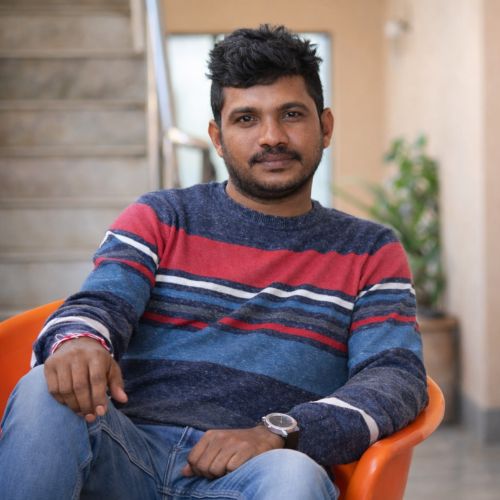
Koti Deva
Digital Marketing Specialist
Koti is a Digital Marketing Specialist with over 10 years of experience and the co-founder of MCQ Orbit — a free exam prep platform built for Indian competitive exam aspirants.
With strong personal knowledge in Quantitative Aptitude, Logical Reasoning, and Mathematics, Koti has a deep understanding of what it takes to crack exams like SSC CGL, IBPS PO, SBI Clerk, UPSC Prelims, NEET, and JEE. Having followed these exams closely for years, he understands the exact topics, patterns, and shortcuts that matter most.
MCQ Orbit was born from a simple desire — to build a platform where every aspirant in India can practice quality MCQs, read reliable current affairs, and prepare confidently, without paying a rupee. Koti combines his digital expertise with his passion for competitive exams to create content that is accurate, practical, and genuinely useful for students.
His mission is straightforward: if the right guidance had been freely available earlier, more students would have cracked their dream exams. MCQ Orbit is his way of making that happen.
Comments
No comments yet.