Current Affairs 28 June 2026 | 28th June 2026 Current Affairs | Daily GK Updates
June 28 was dominated by three stories that connect in fascinating ways — India's Green Urea Roadmap announcement, the world's first nuclear-heat hydrogen production plant making global headlines, and the FIFA World Cup 2026 group stage reaching its climax with six crucial matches. Beyond those, India's Supreme Court upheld the constitutional validity of the Special Intensive Revision in a landmark polity verdict, the Maharashtra TET paper leak crisis deepened, and the FIFA World Cup Round of 32 schedule was confirmed. Here's everything that mattered on June 28.
Environment & Energy
India's Green Urea Roadmap — What It Is and Why It's a Big Deal
India Announces Green Urea Roadmap to Reduce Fossil Fuel Dependence in Fertiliser Production
If you've been following India's energy and agriculture story through 2026, this announcement connects several threads that have been building for months.
The Government of India announced a Green Urea Roadmap on June 28 — a comprehensive plan to transition India's urea production away from conventional natural gas-based processes toward cleaner alternatives, particularly green hydrogen. This is not a marginal tweak to existing policy — it represents a fundamental rethinking of how India produces one of its most strategically important agricultural inputs.
To understand why this matters, consider the numbers. India is the world's second-largest consumer of urea — using approximately 35 million tonnes annually across its agricultural sector. Of this, India currently imports approximately 50% or more (a figure that crossed new highs in FY26 due to global supply disruptions covered in the May 19 current affairs). Every tonne of conventionally produced urea requires approximately 500-600 cubic metres of natural gas as feedstock through the Haber-Bosch process — the century-old method of combining nitrogen and hydrogen to produce ammonia, which is then processed into urea.
The Green Urea Roadmap proposes replacing this fossil-fuel-derived hydrogen with green hydrogen — hydrogen produced by splitting water using renewable electricity through electrolysis. The result is what's called green ammonia, which can then be processed into green urea with near-zero carbon emissions.
Why This Matters Beyond Agriculture
The roadmap sits at the intersection of three of India's most pressing policy priorities simultaneously. On energy security, it reduces India's dependence on imported natural gas for urea production — the West Asian crisis and Strait of Hormuz disruptions have made this vulnerability painfully visible throughout 2026. On climate, urea production is a major source of industrial carbon emissions — transitioning to green urea aligns with India's Paris Agreement commitments. And on strategic autonomy, reducing fertiliser import dependence strengthens India's agricultural supply chain resilience.
India's National Green Hydrogen Mission — launched in January 2023 with a target of producing 5 million tonnes of green hydrogen annually by 2030 — is the enabling framework that makes green urea possible. The roadmap essentially creates a guaranteed demand anchor for green hydrogen production, giving investors confidence to build electrolysis capacity at scale.
The roadmap outlines a phased transition — beginning with blending green ammonia into existing production processes at a 5-10% level, scaling to 30-40% by 2030, and targeting fully green urea production at select plants by 2035. This gradual approach acknowledges that green hydrogen is currently more expensive than fossil-derived hydrogen, but expects costs to fall significantly as electrolyser technology matures and renewable electricity becomes cheaper.
World's First Nuclear-Heat Hydrogen Production Plant — A Clean Energy Breakthrough
The same day India announced its Green Urea Roadmap, the world received news that could eventually reshape the economics of green hydrogen production globally — the world's first hydrogen production plant using nuclear heat technology began attracting significant international attention.
What Nuclear Heat Hydrogen Production Actually Involves
Most people know about two ways to produce hydrogen. Grey hydrogen uses natural gas in a process called steam methane reforming — cheap but carbon-intensive. Green hydrogen uses renewable electricity to split water through electrolysis — clean but currently expensive.
Nuclear heat hydrogen production offers a third pathway that is genuinely different from both. High-temperature nuclear reactors generate heat at temperatures exceeding 700-800°C. This extreme heat can drive a thermochemical process — most commonly the sulphur-iodine cycle or the copper-chlorine cycle — that splits water molecules into hydrogen and oxygen without requiring electricity at all. The result is what's called pink hydrogen or nuclear hydrogen — produced at potentially very high efficiency because nuclear reactors generate sustained high heat that electrolysers cannot replicate.
The significance for global energy systems is substantial. Nuclear reactors run continuously regardless of weather — unlike solar and wind, which are intermittent. A nuclear-heat hydrogen plant can produce hydrogen 24 hours a day, 365 days a year, at a consistent cost — solving the intermittency problem that makes green hydrogen production costs variable.
India's nuclear-hydrogen connection: India's three-stage nuclear programme (PHWRs → Fast Breeder Reactors → Thorium-based reactors) combined with the ANEEL thorium fuel breakthrough covered in May's current affairs means India is positioning itself for nuclear energy expansion. The green urea roadmap and nuclear hydrogen pathway could eventually converge in India's clean energy future.
Governance & Law
Supreme Court Upholds Constitutional Validity of Special Intensive Revision
On May 27, 2026 — a date confirmed by Wikipedia sources — the Supreme Court of India upheld the constitutional validity of the Special Intensive Revision in a landmark verdict. The decision continued generating significant legal and political discourse through June.
What the Special Intensive Revision Is — and Why It Was Challenged
The Special Intensive Revision (SIR) is a process used by the Election Commission of India (ECI) to comprehensively update electoral rolls — going door-to-door to verify, add, and remove voter registrations across an entire constituency or state. It is more intensive than the routine annual Summary Revision and is deployed when significant inaccuracies in electoral rolls are suspected.
The constitutional challenge argued that Special Intensive Revisions — particularly when conducted close to election schedules — could be used selectively to disenfranchise certain communities or manipulate electoral outcomes by removing legitimate voters. Petitioners argued that the process lacked sufficient procedural safeguards and judicial oversight.
The Supreme Court's ruling upholding SIR's validity rests on the constitutional powers of the Election Commission under Article 324 — which gives the ECI superintendence, direction, and control over the preparation of electoral rolls and conduct of elections. The Court held that SIR is a legitimate exercise of this power, provided it follows the Representation of the People Act, 1950 and the Registration of Electors Rules, 1960, and is conducted with adequate notice to affected individuals.
The ruling is significant because electoral roll accuracy is foundational to democratic integrity — inaccurate rolls either deny franchise to legitimate voters or allow fraudulent voting. Getting this balance right is genuinely difficult, and the SC's verdict provides clearer legal ground for the ECI going forward.
Maharashtra TET Crisis Deepens — Systemic Examination Integrity Questions Grow
The Maharashtra Teacher Eligibility Test crisis that began on June 27 (when the exam was postponed one day before it was scheduled to begin) deepened on June 28 as the Maharashtra State Council of Examination (MSCE) issued its official notice explaining the postponement and announcing an investigation.
The official notice confirmed that intelligence inputs about a possible paper leak prompted the last-minute postponement — affecting over 5 lakh registered candidates who had already travelled to their examination centres in many cases, incurring accommodation and travel costs for nothing.
What makes this crisis particularly significant is its context. The Maharashtra TET had already been cancelled in 2021 over a paper leak where examination officials were found to be directly involved. The fact that a similar situation has arisen again in 2026 — after five years of supposed security improvements — suggests that procedural reforms implemented after 2021 were either inadequate or poorly enforced.
The broader pattern is troubling for anyone who cares about educational governance in India. NEET-UG 2026 (120 questions circulated in advance), Maharashtra TET postponed over leak suspicion, and several state-level recruitment examinations facing similar challenges — all in the same year. The common thread is a paper distribution and security chain that relies heavily on human intermediaries who can be compromised. Digital, end-to-end encrypted paper generation and delivery — piloted successfully in some state exams — is the obvious technical solution, but implementation at scale requires resources and political will that has not yet been consistently applied.
Governance & Economy
Madan Mohan Lakhera Passes Away — Former Governor of Mizoram
Lt. General Madan Mohan Lakhera (Retd.), 88, passed away on June 28. He had a distinguished career in the Indian Army and subsequently served as Governor of Mizoram (2006-2011), Lieutenant Governor of Andaman and Nicobar Islands (2006), and Lieutenant Governor of Puducherry (2004-2006).
General Lakhera represented the tradition of senior military officers serving as Governors and Lieutenant Governors — a practice that connects India's civil and military leadership cultures. Governors of states are appointed by the President of India under Article 155 and serve at the President's pleasure under Article 156. Lieutenant Governors of Union Territories are similarly appointed by the President under Article 239.
Sports
FIFA World Cup 2026 — Group Stage Climax
Six Key Matches on June 28 — England, Argentina, and the Race for the Round of 32
June 28 was one of the most exciting days of the FIFA World Cup 2026 group stage — with six crucial matches played simultaneously, several of which determined which nations would advance to the knockout rounds.
The headline matches were England vs Panama and Argentina vs Jordan — but the day had significant storylines across all six fixtures as teams fought to secure their spots in the Round of 32.
FIFA World Cup 2026 — Everything You Need to Know for Exam Preparation
For students preparing for general knowledge sections of competitive exams — whether UPSC, SSC, banking exams, SAT, or any other — here's the complete FIFA World Cup 2026 framework that matters.
The 2026 FIFA World Cup is the 23rd edition of the tournament and the first to feature 48 teams (expanded from 32 in previous editions). It is being hosted jointly by three nations — the United States, Canada, and Mexico — making it the first World Cup with three co-hosts. The final will be played at MetLife Stadium in East Rutherford, New Jersey, USA.
This edition is historically significant for several reasons beyond the team count expansion. It is the centenary year of the World Cup in a sense — while the first World Cup was held in 1930, this 2026 edition is being positioned as a landmark celebration of a century of global football. The expanded 48-team format means more nations from Asia, Africa, and the Americas get to participate — reflecting FIFA's push to grow the game globally.
For India, this World Cup carries special significance. India's football team — ranked around 120th globally — did not qualify. But the 2028 Los Angeles Olympics will feature cricket for the first time in over a century, and the 2026 World Cup's successful hosting by North America is seen as a template for how India could host major global sporting events in the future.
The England vs Panama match on June 28 saw England — one of the tournament favourites — assert dominance in Group C. England arrived at this World Cup under renewed expectations after reaching the final of Euro 2024 and with a talented squad combining experienced players with exciting young talent.
Argentina vs Jordan provided a very different story — Argentina, the defending World Cup champions (Qatar 2022 winners, led by Lionel Messi), were expected to dominate but faced a Jordan side that has been one of Asia's most improved national teams.
FIFA World Cup 2026 Round of 32 Schedule Confirmed
The complete Round of 32 schedule was confirmed on June 28 — marking the transition from the group stage to the knockout rounds. This is the first World Cup to feature a Round of 32 (last 32) — a direct result of the 48-team expansion. In previous 32-team World Cups, the knockout stage began with the Round of 16.
The first Round of 32 match kicked off on June 29 — with Canada stunning South Africa in what was immediately described as one of the tournament's biggest early upsets. Canada, as a co-host nation, had generated enormous home support throughout the group stage, and their advancement to the knockout rounds was a significant moment for North American football's growth.
Science & Technology
Space and Defence Technology
India's Defence Technology Ecosystem — HELINA, Akash, BrahMos Update
Building on the defence technology discussions from June 26 and 27, June 28 saw continued focus on India's indigenous defence systems as the Ministry of Defence released a consolidated update on the operational status of key platforms.
Where India's Three Flagship Systems Stand Today
HELINA — the helicopter-launched anti-tank missile — has achieved Initial Operational Clearance and is being progressively inducted into HAL Rudra helicopter units. The system's infrared imaging seeker allows it to engage targets at night and in poor visibility, and its lock-on-after-launch capability means the launching helicopter can manoeuvre after firing, reducing its exposure. For the Line of Actual Control with China, where terrain favours helicopter-borne operations over heavy artillery in many sectors, HELINA provides a critical capability.
Akash has become India's most successful domestic defence export — the Akash-NG (Next Generation) variant, with an extended range of approximately 70 km and improved guidance, is now under discussion with several potential customers. The Philippines, Armenia, and several other nations are evaluating versions of the system. India has also deployed additional Akash batteries along the LAC as part of the ongoing air defence strengthening.
BrahMos — with 40 Su-30MKI jets now integrated (covered June 26) — continues its dominance as India's most versatile precision strike system. The BrahMos-NG (Next Generation) — a smaller, lighter variant designed for integration with lighter platforms including the Tejas Mark 2 — is in advanced development. Its reduced weight will allow deployment from a much wider range of platforms than the current generation.
Together, these three systems represent India's shift from being a passive defence technology consumer to an active developer and exporter — a transformation that has happened largely within the past decade.
International Affairs
FIFA World Cup 2026 as Soft Power — What Hosting Tells Us About Geopolitics
Beyond the matches themselves, June 28's World Cup discussions highlighted something worth understanding for governance and international relations exam topics — the soft power dimensions of hosting major sporting events.
When the USA, Canada, and Mexico bid jointly for the 2026 World Cup, it was not just a sporting decision. It was a statement about North American integration at a time when US-Mexico relations have been complicated by immigration debates and trade tensions. A joint bid requiring deep cross-border coordination — shared venues, joint security planning, integrated fan travel — demonstrated that three diverse nations could collaborate on a global stage despite bilateral tensions.
For India, this is directly relevant. India has been pursuing hosting rights for multiple major sporting events — the 2036 Olympics bid is actively being discussed, India secured the 2028 World Athletics Indoor Championships for Bhubaneswar (confirmed in March 2026), and the 2026 T20 Women's World Cup was already hosted in India. Each of these events is simultaneously a sporting achievement and a soft power projection — telling the world something about India's organisational capacity, infrastructure, and international standing.
FAQs — 28 June 2026 Current Affairs
Q. What is India's Green Urea Roadmap and why was it announced in June 2026?
India's Green Urea Roadmap is a plan to transition urea production from natural gas-based processes (conventional Haber-Bosch) to green hydrogen-based production (using renewable electricity through electrolysis). It was announced amid India's fertiliser import crisis — urea imports exceeded 50% of requirements in FY26 due to global supply disruptions. The roadmap proposes blending green ammonia into existing plants at 5-10% initially, scaling to 30-40% by 2030, and fully green production at select plants by 2035. It connects to India's National Green Hydrogen Mission (launched January 2023, target: 5 million tonnes/year by 2030).
Q. What is nuclear-heat hydrogen production and how is it different from green hydrogen?
Green hydrogen uses renewable electricity to split water through electrolysis. Nuclear-heat hydrogen uses extreme heat (700-800°C) from high-temperature nuclear reactors to drive thermochemical processes (sulphur-iodine cycle or copper-chlorine cycle) that split water without electricity. The advantage is that nuclear reactors produce consistent, continuous heat regardless of weather — unlike intermittent solar and wind power. The result, called pink or nuclear hydrogen, could potentially be produced more cheaply at scale than electrolysis-based green hydrogen.
Q. What did the Supreme Court rule on the Special Intensive Revision?
The Supreme Court upheld the constitutional validity of the Special Intensive Revision — the Election Commission of India's process for comprehensively updating electoral rolls. The Court held it is a legitimate exercise of the ECI's powers under Article 324, provided it follows the Representation of the People Act 1950 and Registration of Electors Rules 1960 with adequate notice to affected individuals. The ruling provides clearer legal standing for the ECI's electoral roll management processes.
Q. What is the FIFA World Cup 2026 format and why is it different?
The 2026 FIFA World Cup is the 23rd edition and the first to feature 48 teams (expanded from 32). It is hosted jointly by three nations — USA, Canada, and Mexico — the first ever three-nation co-hosting. The final will be played at MetLife Stadium, East Rutherford, New Jersey, USA. The expanded format introduces a Round of 32 (last 32) as the first knockout stage — a new addition compared to previous tournaments that began knockouts at the Round of 16. The first Round of 32 match on June 29 saw Canada defeat South Africa.
Q. How does India's Green Urea Roadmap connect to the National Green Hydrogen Mission?
India's National Green Hydrogen Mission (launched January 2023) targets producing 5 million tonnes of green hydrogen annually by 2030. Green urea production requires green hydrogen (specifically green ammonia) as a feedstock, replacing natural gas. The Green Urea Roadmap creates guaranteed domestic demand for green hydrogen — making electrolysis investment commercially viable — while simultaneously reducing India's fertiliser import dependence, cutting industrial carbon emissions, and improving agricultural supply chain security. It is effectively the Green Hydrogen Mission's first large-scale industrial demand anchor.
Written by
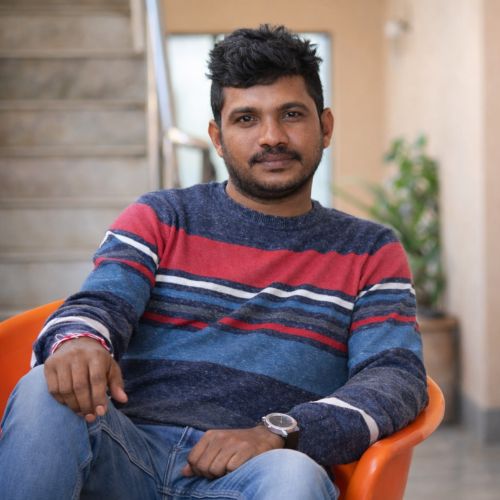
Koti Deva
Digital Marketing Specialist
Koti is a Digital Marketing Specialist with over 10 years of experience and the co-founder of MCQ Orbit — a free exam prep platform built for Indian competitive exam aspirants.
With strong personal knowledge in Quantitative Aptitude, Logical Reasoning, and Mathematics, Koti has a deep understanding of what it takes to crack exams like SSC CGL, IBPS PO, SBI Clerk, UPSC Prelims, NEET, and JEE. Having followed these exams closely for years, he understands the exact topics, patterns, and shortcuts that matter most.
MCQ Orbit was born from a simple desire — to build a platform where every aspirant in India can practice quality MCQs, read reliable current affairs, and prepare confidently, without paying a rupee. Koti combines his digital expertise with his passion for competitive exams to create content that is accurate, practical, and genuinely useful for students.
His mission is straightforward: if the right guidance had been freely available earlier, more students would have cracked their dream exams. MCQ Orbit is his way of making that happen.
Comments
No comments yet.