Current Affairs 25 June 2026 | 25th June 2026 Current Affairs | Daily GK Updates
June 25 is one of those dates that carries a lot of weight in India's political memory — and this year it was observed with renewed intensity. But beyond the constitutional history, today had a packed lineup of genuinely important stories. India topped global ship recycling charts for the fourth consecutive year. GRSE was elevated to Navratna PSU status. The RBI issued new TReDS directions that could meaningfully improve MSME access to credit. India's trade reached $1.84 trillion as NITI Aayog's Trade Watch report landed. S&P Global revised India's GDP forecast to 6.6% for FY27. Four new policing apps were launched under the ICJS framework. India objected to Pakistan at the UN over the Kashmir issue. And François Englert, the Nobel laureate known for the Higgs boson, passed away. Let's get into everything.
Important Day — Samvidhan Hatya Diwas
June 25 — India Observes Samvidhan Hatya Diwas, Marking 51 Years Since Emergency
If you're appearing for any Indian government exam — UPSC, SSC, State PSC, Banking — June 25 is a date you must know cold.
On June 25, 1975, Prime Minister Indira Gandhi proclaimed a National Emergency under Article 352 of the Constitution — citing "internal disturbance" as the ground. It lasted until March 21, 1977 — 21 months during which fundamental rights were suspended, press freedom was crushed, political opponents were jailed, and elections were postponed. It remains the darkest chapter in post-independence Indian democracy.
The current government officially renamed this observance "Samvidhan Hatya Diwas" (Constitution Assassination Day) in 2024 — a political framing that has been both embraced by some and contested by others as revisionist. Regardless of the name, the constitutional significance of the date is beyond dispute.
This year marked the 51st anniversary of the Emergency proclamation — and the observance generated wide-ranging discussion about constitutional safeguards, the role of a free press, and the importance of judicial independence. All of these themes connect directly to the 44th Constitutional Amendment Act (1978), which was passed after the Emergency ended — specifically to prevent future misuse of Article 352. The 44th Amendment changed the ground for emergency from "internal disturbance" to the stricter "armed rebellion," required Cabinet's written recommendation to the President, mandated Lok Sabha approval within one month, and allowed Lok Sabha to revoke Emergency by simple majority.
Day of the Seafarer — June 25
Also observed on June 25 was the Day of the Seafarer — established by the International Maritime Organization (IMO) to recognise the essential role seafarers play in keeping global trade moving. The 2026 theme was "Carrying world trade. Carrying the risks." — a theme that has particular resonance this year given the Strait of Hormuz crisis that has put seafarers in genuinely dangerous situations.
India has one of the world's largest seafarer communities — approximately 2.4 lakh Indian seafarers work on international vessels, making India a top five maritime manpower supplier globally. The Indian maritime industry is governed by the Directorate General of Shipping under the Ministry of Ports, Shipping and Waterways.
International Affairs
India Objects to Pakistan at UN Forum Over Kashmir — Parvathaneni Harish Responds
At a United Nations forum in New York on June 24, Pakistan attempted — as it does with considerable regularity — to raise the Kashmir issue. India's Permanent Representative to the United Nations, Ambassador Parvathaneni Harish, exercised India's right of reply and firmly objected.
India's position on this is clear and consistent: Jammu and Kashmir is an integral part of India, and bilateral issues cannot be raised at multilateral forums. What Pakistan characterises as an "internationally recognised dispute" is, in India's view, a bilateral matter covered by the Simla Agreement (1972), which both countries signed and which commits them to resolving disputes through bilateral dialogue only.
Pakistan's attempts to internationalise the Kashmir issue have accelerated in the aftermath of the Pahalgam terror attack (April 2025) and India's subsequent diplomatic offensive — including the placing of the Indus Waters Treaty in abeyance and the UNSC statements on cross-border terrorism that India has been making consistently through 2026. India's counter at the UN continues to emphasise that Pakistan's own record on terrorism is what deserves international scrutiny.
India-China Hold Talks on Bilateral Normalisation — Doval Meets Wang Yi
On June 22, National Security Adviser Ajit Doval met Chinese Foreign Minister Wang Yi in New Delhi — continuing the gradual diplomatic normalisation process between the two countries that has been underway since the Galwan Valley disengagement agreements of October 2024.
The meeting covered the Line of Actual Control (LAC) situation — both sides acknowledged "positive progress" on disengagement at friction points in eastern Ladakh while flagging remaining areas of concern. Trade normalisation also featured — India-China trade, despite the political tensions, remains at approximately $100 billion annually, making China India's largest trading partner by a considerable margin.
The Doval-Wang Yi meeting is significant because it brings together the head of India's intelligence-security apparatus with China's top diplomat — suggesting discussions went beyond pleasantries into substantive strategic territory, including possibly the ongoing West Asia crisis and its impact on both countries' energy security.
Maritime & Infrastructure
India Tops Global Ship Recycling — Fourth Consecutive Year
If there's one sector where India has established undisputed global dominance, it is ship recycling — and the numbers confirmed on June 25 make the case powerfully.
India retained its position as the world's number one ship recycling nation for the fourth consecutive year, accounting for approximately 32% of global ship recycling in terms of Gross Tonnage. The Alang Ship Recycling Yard in Bhavnagar, Gujarat — stretching across approximately 10 kilometres of coastline — is the world's largest ship recycling facility, dismantling hundreds of vessels annually and employing over 15,000 workers directly.
Union Minister Sarbananda Sonowal (Ministry of Ports, Shipping and Waterways) announced the milestone, also noting that the V.O. Chidambaranar Port Authority (VOCPA) in Thoothukudi, Tamil Nadu has emerged as a model for sustainable maritime development — recording a remarkable 45% reduction in net carbon emissions.
What Ship Recycling Actually Involves
For readers unfamiliar with the industry — ship recycling (also called ship breaking) is the process of dismantling end-of-life ships to recover steel and other valuable materials for reuse. A large ship contains thousands of tonnes of steel, along with copper, aluminium, and other metals. India's dominance in this sector is driven by lower labour costs, strong steel demand from domestic re-rolling mills, and Alang's natural tidal advantage (ships can be beached directly on the shore for dismantling).
The environmental and safety dimensions of ship recycling have historically been controversial. India's Recycling of Ships Act, 2019 — enacted to comply with the Hong Kong International Convention for the Safe and Environmentally Sound Recycling of Ships (2009) — brought significant regulatory improvements to Alang. Workers now have better safety equipment, hazardous materials like asbestos and PCBs must be managed according to environmental protocols, and certification requirements have raised standards considerably.
Defence & Public Sector
GRSE Elevated to Navratna PSU Status — A Major Upgrade for India's Shipbuilder
Garden Reach Shipbuilders and Engineers Limited (GRSE) was elevated to Navratna Public Sector Undertaking (PSU) status on June 25 — a significant upgrade from its earlier Miniratna Category I status.
If you're preparing for any government exam and PSU classifications come up, here's the hierarchy you need to know: Maharatna is the top tier (for PSUs with turnover exceeding ₹25,000 crore), followed by Navratna (for PSUs meeting specific financial performance benchmarks), and then Miniratna Category I and II. Navratna status grants greater financial and operational autonomy — GRSE can now take investment decisions up to ₹1,000 crore without government approval, compared to the ₹500 crore limit under Miniratna.
GRSE is headquartered in Kolkata and is one of India's premier defence shipbuilders — responsible for constructing frigates, corvettes, fast attack craft, landing craft, and survey vessels for the Indian Navy and Coast Guard. Among its most significant projects are the P17A Stealth Frigates (being built alongside Mazagon Dock) and a range of vessels for export to friendly foreign nations.
The Navratna elevation comes at a time when India's maritime ambitions — including the Maritime Amrit Kaal Vision 2047 targeting a top-five global shipbuilding rank — are creating unprecedented demand for GRSE's capabilities.
Economy & Banking
RBI Issues Revised TReDS Directions — Big News for MSMEs
The Reserve Bank of India issued the "RBI (Trade Receivables Discounting System) Directions, 2026" — a set of revised guidelines designed to simplify MSME onboarding onto TReDS platforms and enable credit guarantees for the first time.
If you haven't come across TReDS before, here's the quick explainer. TReDS (Trade Receivables Discounting System) is a digital platform that allows Micro, Small and Medium Enterprises (MSMEs) to convert their trade receivables — money owed to them by large buyers — into immediate cash by auctioning these receivables to banks and NBFCs. The core problem it solves is delayed payment: a large corporation might take 60-90 days to pay a small supplier, but the MSME needs cash now. TReDS bridges this gap.
The 2026 directions make two significant changes. First, they simplify the onboarding process — reducing documentation requirements and enabling digital KYC for MSMEs joining TReDS platforms. Second — and this is the bigger deal — they enable credit guarantees on TReDS transactions. Until now, banks funding TReDS receivables bore the credit risk entirely. With credit guarantees (likely through CGTMSE — Credit Guarantee Fund Trust for Micro and Small Enterprises), more financiers can participate in TReDS at lower risk, ultimately increasing liquidity for small businesses.
India has three operational TReDS platforms — M1xchange, Invoicemart, and RXIL — all registered with RBI. These platforms together process billions of rupees in MSME invoices annually, though penetration remains low among smaller MSMEs.
NITI Aayog Trade Watch Report — India's Trade Crosses $1.84 Trillion
NITI Aayog released the 8th edition of Trade Watch Quarterly for Q4 FY26 on June 25 — and the headline number is striking. India's total merchandise and services trade reached $1.84 trillion in FY26, representing 5.4% growth over FY25. The pharmaceutical sector was highlighted as the key focus area in this edition.
To put $1.84 trillion in perspective — India is now one of the world's top ten trading nations by total trade volume. The pharmaceutical sector's prominence in the report is particularly noteworthy: India supplies approximately 20% of global generic medicines by volume, earning it the title of "pharmacy of the world." Indian pharma exports have been growing robustly as global demand for affordable generics continues to rise, especially post-COVID-19.
The report also flagged challenges — the ongoing West Asian energy disruption has increased import costs and widened the trade deficit, and non-tariff barriers in key export markets continue to constrain India's agricultural and processed food exports.
S&P Global Cuts India's FY27 GDP Forecast to 6.6%
S&P Global revised India's FY27 GDP growth projection down to 6.6%, citing global economic uncertainties — specifically the West Asian energy crisis, elevated commodity prices, and weak monsoon concerns given the El Niño backdrop.
The revision from S&P's earlier 6.9% projection is notable — though 6.6% still keeps India as one of the world's fastest-growing major economies. For context, China is projected at around 4.5-4.8% for the same period, and the US at 2.1%. The IMF's April 2026 World Economic Outlook had India at 6.8% — S&P's downward revision reflects the deteriorating energy situation since April.
The "weak monsoon concerns" note from S&P is interesting given that the monsoon actually made its earliest onset since 2009 on May 24. The concern is not about onset but about distribution — El Niño conditions could still suppress July-August rainfall over central and northwest India even after an early arrival in Kerala.
Environment & Science
Two New Moth Species Discovered in Western Ghats of Kerala — ZSI
The Zoological Survey of India (ZSI) discovered two new moth species in the Western Ghats of Kerala — adding to the extraordinary biodiversity inventory of one of the world's eight hottest biodiversity hotspots.
The Western Ghats — a mountain range running parallel to India's western coast through Gujarat, Maharashtra, Goa, Karnataka, Kerala, and Tamil Nadu — is a UNESCO World Heritage Site and recognised globally as a biodiversity hotspot. The region is home to thousands of endemic species — plants, insects, amphibians, birds, and mammals found nowhere else on Earth. New species discoveries here happen regularly, but each one adds scientifically valuable data to our understanding of how biodiversity is distributed and what needs protecting.
The ZSI is headquartered in Kolkata and operates 16 regional stations across India. It is the country's primary zoological survey organisation under the Ministry of Environment, Forest and Climate Change, responsible for exploring, discovering, and documenting India's animal diversity.
Two New Microscopic Snail Species Found in Meghalaya's Limestone Caves — ATREE
Scientists from ATREE (Ashoka Trust for Research in Ecology and the Environment) discovered two new microscopic snail species in Meghalaya's limestone caves.
Meghalaya is home to some of the world's largest cave systems — including Krem Liat Prah, which at over 31 kilometres is the longest sandstone cave in the world, and an extensive network of limestone caves that harbour unique subterranean ecosystems. Cave snails are among the least-studied organisms on Earth — they live in complete darkness, move extraordinarily slowly, and have adapted to caves over thousands of years. Their discovery adds to India's growing database of cave biodiversity.
ATREE is a Bengaluru-based environmental research organisation that has been instrumental in biodiversity discovery and conservation policy in India for over 25 years.
Technology & Governance
Four New Policing Apps Launched Under ICJS — Transforming Law Enforcement Digitally
The government launched four new policing applications under the Interoperable Criminal Justice System (ICJS) framework — a significant step in India's digital transformation of law enforcement.
ICJS is India's integrated digital platform that connects all five pillars of the criminal justice system — Police, Courts, Prosecution, Prison, and Forensics — through a shared digital infrastructure. The idea is that when a person is arrested, all relevant information flows seamlessly between police, prosecution, courts, and prisons rather than requiring physical paper transfer, which historically caused enormous delays and information gaps.
The four new apps expand the ICJS ecosystem specifically for field-level police use — enabling officers to file FIRs, access suspect databases, record evidence, and track case status from mobile devices in real time. This is particularly significant for India's rural policing where officers are often stationed far from police stations.
The ICJS falls under the Ministry of Home Affairs and is managed through the National Crime Records Bureau (NCRB) — the same body that publishes the Crime in India annual report covered in the May 7 current affairs.
Exam Relevance: UPSC GS Paper II (Governance, e-Governance), SSC CGL, State PSC — ICJS, NCRB, digital governance in law enforcement are standard exam topics.
China's LineShine Tops TOP500 — World's Most Powerful Supercomputer 2026
China's LineShine topped the TOP500 rankings to become the world's most powerful supercomputer in 2026, dethroning the previous title holder.
The TOP500 list is published twice a year — in June and November — by a consortium of supercomputing experts. It ranks the 500 most powerful non-distributed computer systems in the world based on the LINPACK benchmark (a standard mathematical computation test). China has been a major competitor in supercomputing for over a decade, and LineShine's position at the top reflects massive Chinese state investment in high-performance computing for AI, climate modelling, nuclear simulation, and drug discovery.
For India, this is a relevant comparison point — India's fastest supercomputer is Param Rudra and the AI supercomputer at IIT Bombay under the IndiaAI Mission, though neither approaches the performance of top global systems. India's supercomputing push is governed by the National Supercomputing Mission (NSM) — a joint initiative of DST (Department of Science and Technology) and MeitY targeting 70 high-performance computing facilities across India.
Nobel Laureate François Englert Passes Away
François Englert, the Belgian theoretical physicist who shared the 2013 Nobel Prize in Physics with Peter Higgs for the theoretical discovery of the Higgs boson mechanism, passed away on June 25, 2026.
The Higgs boson — often called the "God Particle" in popular science (a term physicists themselves find somewhat misleading) — is the particle that gives mass to all other elementary particles through the Higgs field. Englert and Higgs independently proposed the mechanism in 1964, and it was experimentally confirmed in 2012 by the CERN Large Hadron Collider (LHC) in Geneva, Switzerland — one of the most celebrated moments in 21st century physics.
Englert was associated with the Université Libre de Bruxelles in Belgium and was known not just for the Higgs work but for broader contributions to theoretical physics, including cosmological models of the early universe.
Conservation & Awards
Whitley Awards 2026 — Two Indian Women Win "Green Oscars"
Two Indian women conservationists won the prestigious Whitley Awards 2026 — internationally recognised as the "Green Oscars" for grassroots conservation leaders from the Global South.
The Whitley Fund for Nature (WFN) — a UK-based charity — awards these prizes annually to conservationists who have shown outstanding leadership in protecting biodiversity in developing countries with limited resources. India has been one of the most consistent winners of this award over the years, reflecting the depth of grassroots conservation work happening across the country.
This year's Indian winners were recognised for work in species-specific conservation and community-based ecosystem protection — two approaches that India has been increasingly championing as models for biodiversity conservation that work in dense-population contexts. The awards were presented in London.
Sports
QS Skills Index — India Ranks 13th Globally
The QS World University Rankings Skills Index — which measures how well a country's graduates are prepared for the global job market — ranked India 13th globally in its 2026 edition.
The QS Skills Index evaluates countries on graduate employability, skills outcomes, and the alignment between university education and employer needs. India's 13th position reflects both the strength of its top engineering and management institutions (IITs, IIMs, IISc) and the continuing employability gap at the broader higher education system level.
India's placement in the top 15 globally is a genuine achievement — particularly given the scale and diversity of India's higher education system (over 1,000 universities and 40,000 colleges). The challenge remains improving skills outcomes not just at elite institutions but across the entire system, particularly for students from state universities and smaller colleges who constitute the vast majority of India's graduates.
FAQs — 25 June 2026 Current Affairs
Q. What is Samvidhan Hatya Diwas and why is it observed on June 25?
Samvidhan Hatya Diwas is observed on June 25 to mark the anniversary of the Emergency proclaimed by PM Indira Gandhi on June 25, 1975 under Article 352 of the Constitution, citing "internal disturbance." The Emergency lasted until March 21, 1977 — 21 months during which fundamental rights were suspended, press freedom curtailed, and political opponents jailed. The 44th Constitutional Amendment (1978) was enacted after the Emergency to prevent future misuse — changing the ground from "internal disturbance" to "armed rebellion" and adding procedural safeguards.
Q. Why has India topped global ship recycling for the fourth consecutive year?
India accounts for approximately 32% of global ship recycling by gross tonnage, led by the Alang Ship Recycling Yard in Bhavnagar, Gujarat — the world's largest ship recycling facility. India's dominance is driven by lower labour costs, strong steel demand from domestic re-rolling mills, and Alang's natural tidal advantage. The Recycling of Ships Act, 2019 aligned India with the Hong Kong International Convention, improving safety and environmental standards at Alang.
Q. What is TReDS and what did RBI's 2026 directions change?
TReDS (Trade Receivables Discounting System) is a digital platform enabling MSMEs to convert trade receivables into immediate cash by auctioning them to banks and NBFCs — solving the delayed payment problem. RBI's 2026 directions simplified MSME onboarding with reduced documentation and digital KYC, and enabled credit guarantees (likely through CGTMSE) on TReDS transactions — making it less risky for financiers to participate and potentially unlocking more liquidity for small businesses. India has three TReDS platforms: M1xchange, Invoicemart, and RXIL.
Q. What did NITI Aayog's Trade Watch Quarterly report say about India's trade?
The 8th edition of Trade Watch Quarterly (Q4 FY26) reported that India's total merchandise and services trade reached $1.84 trillion in FY26 — a 5.4% growth over FY25. The pharmaceutical sector was the key focus, reflecting India's position as the "pharmacy of the world" supplying approximately 20% of global generic medicines by volume.
Q. Why is François Englert's passing significant for science?
François Englert was the Belgian physicist who co-developed the Higgs mechanism — the theoretical framework explaining how elementary particles acquire mass through the Higgs field. He shared the 2013 Nobel Prize in Physics with Peter Higgs. The Higgs boson was experimentally confirmed in 2012 at CERN's Large Hadron Collider in Geneva. Englert was associated with the Université Libre de Bruxelles.
Q. What is GRSE's Navratna status and why does it matter?
Garden Reach Shipbuilders and Engineers (GRSE), headquartered in Kolkata, was elevated from Miniratna Category I to Navratna PSU status. Navratna status grants greater financial autonomy — GRSE can now make investment decisions up to ₹1,000 crore without government approval (up from ₹500 crore). GRSE builds frigates, corvettes, and other vessels for the Indian Navy and is involved in the P17A Stealth Frigate programme and naval export contracts.
Written by
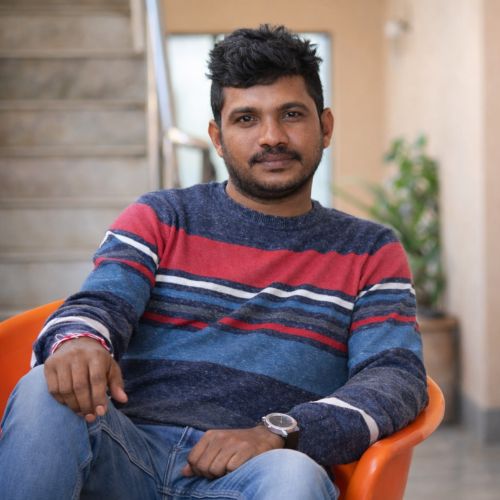
Koti Deva
Digital Marketing Specialist
Koti is a Digital Marketing Specialist with over 10 years of experience and the co-founder of MCQ Orbit — a free exam prep platform built for Indian competitive exam aspirants.
With strong personal knowledge in Quantitative Aptitude, Logical Reasoning, and Mathematics, Koti has a deep understanding of what it takes to crack exams like SSC CGL, IBPS PO, SBI Clerk, UPSC Prelims, NEET, and JEE. Having followed these exams closely for years, he understands the exact topics, patterns, and shortcuts that matter most.
MCQ Orbit was born from a simple desire — to build a platform where every aspirant in India can practice quality MCQs, read reliable current affairs, and prepare confidently, without paying a rupee. Koti combines his digital expertise with his passion for competitive exams to create content that is accurate, practical, and genuinely useful for students.
His mission is straightforward: if the right guidance had been freely available earlier, more students would have cracked their dream exams. MCQ Orbit is his way of making that happen.
Comments
No comments yet.