June 23, 2026 was a day that packed in a lot — diplomacy, disaster, monsoon drama, education controversy, and some important governance developments all landed together. The most significant story is India hosting the 16th BRICS National Security Advisers' Meeting in New Delhi under NSA Ajit Doval — a key preparatory meeting ahead of the September BRICS Leaders' Summit. Meanwhile, 12 Indian workers died in an explosion at Qatar's Ras Laffan industrial facility, triggering an urgent diplomatic response. The Southwest Monsoon resumed its advance into central India after a two-week pause, bringing relief to farmers waiting anxiously for Kharif sowing. Bihar police busted a NEET impersonation racket, the IAS e-Civil List 2026 was launched digitally, and Syama Prasad Mookerjee's death anniversary was observed with significant political attention. Let's cover everything.
International Affairs
16th BRICS National Security Advisers' Meeting — New Delhi, June 22–23
If you want to understand India's foreign policy in 2026, this meeting is one of the clearest windows into it.
The National Security Advisers and Heads of Delegation from BRICS member countries gathered in New Delhi on June 22–23 to exchange views on security challenges confronting the world. In the non-traditional security realm, they deliberated on challenges related to energy security, food security, supply chain security, emerging technologies utilised by terrorist networks, cybersecurity, and climate-induced instability.
The meeting — the 16th BRICS NSA meeting — was chaired by India's National Security Adviser Ajit Doval. Prime Minister Narendra Modi met the NSAs and senior security officials from BRICS nations after the meeting concluded, highlighting the group's rising role in tackling today's global security challenges. Against a backdrop of "increasing geopolitical uncertainty," talks focused on non-traditional threats like terrorism, cybersecurity, and risks from emerging technologies.
High-level representatives from China (Wang Yi), Russia (Sergei Shoigu), and Iran confirmed attendance at the meeting. The NSA meeting is viewed as a preparatory step for the BRICS Leaders' Summit scheduled for September 12–13 in India.
The NSAs also reviewed the activities and outcomes of the BRICS Joint Working Groups on Counter-Terrorism held on May 21–22, 2026, and on Security in the use of Information and Communication Technologies held on June 8–9, 2026. The leaders expressed support for enhancing BRICS cooperation, particularly on strengthening capacities of members, enhancing information sharing, and coordinating amongst BRICS law-enforcement agencies to counter terrorism and cyber risks collectively.
What makes this meeting particularly interesting is who was in the room. Wang Yi (China's top diplomat), Russia's Sergei Shoigu, and Iran's representative — all sitting with India's Ajit Doval just weeks before the BRICS Leaders' Summit. The meeting essentially sets the security agenda for September's summit, and India's ability to find consensus among nations with wildly different worldviews is a real test of its diplomatic skill as Chair.
NSA Ajit Doval called for stable and predictable India-China relations, emphasising the importance of normalisation on the ground. India's BRICS Chairship in 2026 is its fourth, having previously held the position in 2012, 2016, and 2021.
12 Indians Killed in Qatar's Ras Laffan Industrial Explosion
This is one of the most tragic stories of June 2026 — and one with direct policy implications for India's diaspora protection framework.
External Affairs Minister S. Jaishankar expressed condolences after 12 Indians were among those killed in an explosion at Qatar's Ras Laffan industrial facility. India initiated assistance and coordination efforts following the incident.
Ras Laffan Industrial City is one of the world's largest industrial zones — located in northern Qatar, it is the operational heart of Qatar's liquefied natural gas (LNG) industry. The facility processes and exports a significant portion of the world's LNG supply. Indian workers — primarily from states like Kerala, Tamil Nadu, Andhra Pradesh, and Telangana — form a large part of the workforce in Qatar's industrial sector.
The tragedy brings into sharp focus several policy dimensions that are directly exam-relevant. India's emigration framework is governed by the Emigration Act, 1983 — which is widely considered outdated and inadequate for protecting the rights of Indian workers in Gulf countries. The eMigrate system was launched to digitise emigration clearances, but enforcement gaps persist. Qatar itself has been under international pressure since 2022 to implement the Kafala (sponsorship) system reforms that tie migrant workers' legal status to their employers.
India's Pravasi Bharatiya Bima Yojana (PBBY) provides insurance coverage to overseas Indian workers — but awareness and coverage remain incomplete, particularly among informal sector workers. The Qatar tragedy will likely accelerate discussions around updating the Emigration Act and strengthening bilateral Labour Mobility Agreements with Gulf countries.
Environment & Climate
Southwest Monsoon Revives After Two-Week Pause — IMD Issues Alerts for 13 States
If you've been following the 2026 monsoon story, you'll know it arrived over Kerala on May 24 — the earliest since 2009. But then it slowed dramatically, causing anxiety among farmers across central India.
The southwest monsoon resumed its advance after a two-week slowdown, bringing rain to central India and improving conditions for agriculture. The revival is crucial for Kharif crop sowing and rural economic activity. The IMD warned of heavy rainfall in Maharashtra, Bihar, Odisha, Assam, and several other states, with authorities preparing for flooding and weather-related disruptions. East Uttar Pradesh and Vidarbha remain under heatwave alerts despite monsoon progress elsewhere.
This kind of spatial unevenness — where it's flooding in Assam and still under heatwave alert in eastern UP simultaneously — is classic Indian monsoon behaviour. The monsoon doesn't move uniformly across the country. It advances in surges, pauses, retreats slightly, and then surges again. The two-week pause was worrying because it coincided with the critical window for Kharif sowing of paddy, soybean, and cotton in Maharashtra and central India.
The revival matters enormously for India's food security. Kharif crops — planted with the monsoon's arrival and harvested in October — account for nearly half of India's annual foodgrain production. Any delay or deficit in the June-July monsoon directly affects crop yields, food inflation, and rural incomes for the rest of the year.
Governance & Policy
IAS e-Civil List 2026 Launched — 71st Edition Goes Digital
The Union Minister launched the IAS e-Civil List 2026, the 71st edition of the Civil List and the sixth edition released in digital format. The IAS e-Civil List 2026 is a digital database and official directory containing comprehensive service details of Indian Administrative Service officers across the country. It falls under the Ministry of Personnel, Public Grievances and Pensions, specifically the Department of Personnel and Training (DoPT), which is the cadre controlling authority of the IAS. The purpose is to facilitate talent identification, cadre management, and optimal deployment of IAS officers, and to promote transparency, accessibility, and evidence-based administrative planning through digital platforms. The directory contains details regarding batch, cadre, posting, pay level, educational qualifications, and retirement dates of IAS officers.
The Civil List has been published since 1956 — making this the 71st edition. The shift to digital (this being the sixth digital edition) reflects India's broader push for e-governance and transparency in public administration. For UPSC aspirants specifically, the IAS Civil List is the definitive official record of the service they are preparing to join — understanding how cadre allocation, posting, and career progression works is directly relevant to General Studies Paper II (Governance and Public Administration).
DoPT's role as cadre controlling authority means it manages not just recruitment (through UPSC) but the entire career lifecycle of IAS officers — including empanelment for senior posts, foreign assignments, Central Staffing Scheme postings, and disciplinary proceedings. The digitisation of this information makes the system more transparent and accessible to policymakers and researchers studying India's administrative machinery.
Syama Prasad Mookerjee — Death Anniversary, June 23
Prime Minister Narendra Modi paid homage to Syama Prasad Mookerjee on his death anniversary, highlighting his contribution to nation-building. The occasion remains politically and historically significant.
Syama Prasad Mookerjee (1901–1953) was one of post-independence India's most consequential political figures — and understanding his legacy is important for both History and Polity sections of competitive exams.
He was a brilliant academic who became Vice Chancellor of Calcutta University at just 33 years — the youngest in its history at that time. He served as Industry Minister in Nehru's first Cabinet but resigned in 1950 over the Nehru-Liaquat Pact on minority rights — believing it did not adequately protect Hindus in Pakistan.
He founded the Bharatiya Jana Sangh in 1951 — the ideological forerunner of today's Bharatiya Janata Party (BJP). His most famous political campaign was against the requirement for permits to enter Jammu and Kashmir under the special arrangements then in force — famously declaring "Ek desh mein do Vidhan, do Pradhan, do Nishan nahin chalenge" (One country cannot have two constitutions, two prime ministers, two symbols). He was arrested entering J&K without a permit in May 1953 and died in detention on June 23, 1953 — making today exactly 73 years since his death.
The circumstances of his death in detention remain a subject of political debate to this day.
Railways Announce Stricter Penalties for Prohibited Goods
Indian Railways announced stricter penalties for carrying prohibited goods on trains.
Indian Railways — the world's fourth-largest rail network by route length — carries over 8 billion passengers annually and moves approximately 1.3 billion tonnes of freight per year. The prohibited goods policy covers items that are dangerous (inflammable, explosive, corrosive), commercially restricted (controlled substances, wildlife products), or simply hazardous to other passengers.
The stricter penalties follow several incidents where passengers carried LPG cylinders, illegal fireworks, or hazardous chemicals in passenger compartments — creating serious safety risks. The enforcement challenge is enormous — with over 8,000 stations and hundreds of trains running simultaneously, Railways relies on a combination of scanning technology, Railway Protection Force checks, and passenger reporting.
Education
Bihar Police Bust NEET Impersonation Racket — Dummy Candidate Network Arrested
Bihar police arrested individuals allegedly involved in a dummy-candidate and impersonation racket for NEET examinations.
This is the latest development in the ongoing NEET-UG 2026 crisis that has dominated education news since May. A "dummy candidate" racket — where someone else sits for the exam in place of a paying candidate — is a particularly sophisticated form of exam fraud that requires coordination between the paying student, the impersonator, and often corrupt insiders who facilitate entry.
Bihar has unfortunately been at the centre of several high-profile exam paper leak and impersonation cases over the years — partly because of the high demand for government jobs and medical admissions in a state with limited formal employment opportunities, and partly because criminal networks have become sophisticated at exploiting vulnerabilities in examination systems.
The arrests come after the CBI's May 2026 finding (covered in May 23 current affairs) that the NEET 2026 paper leak occurred at peripheral distribution points rather than NTA's core system — suggesting that state-level criminal networks are the primary threat, not central system failures. Bihar's arrests are consistent with this picture.
Maharashtra Postpones TET 2026 — Paper Leak Suspicion
The Maharashtra State Council of Examination postponed the Maharashtra Teacher Eligibility Test (TET 2026) which was scheduled to begin on June 28, after suspicion of a paper leak.
Yet another examination integrity failure — this time affecting Maharashtra's TET. Teacher Eligibility Tests are conducted by states to certify candidates for teaching positions in government schools under the Right to Education Act, 2009, which mandates minimum qualification standards for teachers. A TET paper leak would affect thousands of aspiring teachers and delay school hiring cycles.
Maharashtra's decision to postpone rather than proceed — despite the disruption this causes to candidates — reflects how sensitised examination authorities have become to paper leak allegations in the post-NEET 2026 environment. The political and legal cost of proceeding with a compromised exam is now seen as higher than the disruption of postponement.
Internal Security
Delhi Police Arrest Pakistan-Backed Terror-Crime Syndicate
Delhi Police arrested seven operatives of a Pakistan-backed international terror-crime syndicate involved in smuggling illegal arms, ammunition, and narcotics from Pakistan into Delhi-NCR.
The arrest of seven operatives in this syndicate reveals the nexus between organised crime and terrorism — one of the most dangerous security challenges India faces. This is not simple drug trafficking or arms smuggling — it is a Pakistan-backed network designed to simultaneously generate revenue through narcotics and destabilise India through weapons proliferation in urban areas.
The Three Frontiers region (India-Bangladesh-Myanmar border) is a well-documented smuggling corridor — but the Pakistan-Delhi-NCR route uses different pathways, including the Punjab border, the Rajasthan desert crossings, and increasingly, sea routes through Gujarat. Weapons smuggled in this way feed into criminal gangs, communal violence networks, and terror cells simultaneously.
The NIA (National Investigation Agency) and Delhi Police coordinate closely on such operations under the NIA Act, 2008, with intelligence inputs from RAW and IB providing the operational leads.
NIA Chargesheet in 2025 Delhi Car Explosion — Three More Accused Named
The National Investigation Agency chargesheetted three more accused from Jammu and Kashmir in connection with the 2025 Delhi car explosion.
The 2025 Delhi car explosion — a targeted attack involving an IED concealed in a vehicle — has been one of NIA's most complex ongoing investigations. The J&K connection suggests the involvement of Pakistan-based terror groups who use J&K as a staging ground for operations targeting Delhi and other major cities.
NIA's chargesheet is a significant legal milestone — it means investigators have gathered sufficient evidence to formally prosecute these three additional accused in court. Given the serious charges under the UAPA (Unlawful Activities Prevention Act) and Explosives Act, conviction could mean life imprisonment.
Environment & Conservation
Kuno National Park — Cheetahs from Botswana Arrive
Under Project Cheetah, Kuno received cheetahs from Namibia (2022), South Africa (2023), and Botswana (2026), making it India's first cheetah reintroduction site.
Botswana's contribution to Project Cheetah represents a third source country — adding genetic diversity to the population at Kuno National Park in Madhya Pradesh. As covered extensively in May 2026 current affairs, Kuno's cheetah population had grown to 57 individuals — with these new Botswana arrivals pushing the numbers further.
The addition of Botswana cheetahs is significant for conservation genetics. The Namibian and South African populations already have slightly different genetic profiles — Botswana's cheetahs add further genetic diversity, which is critical for long-term population health and disease resilience.
Technology & Science
AI-Based Crowd Management Planned for Sabarimala — Kerala
Authorities are considering AI-powered crowd management systems for future Sabarimala pilgrimages.
Sabarimala temple in Kerala's Pathanamthitta district receives approximately 50 million pilgrims annually — making it one of the world's largest annual pilgrimage gatherings. Managing crowds of this scale in a forest hill setting, with narrow access paths and limited infrastructure, has been a perennial safety challenge. Stampedes, overcrowding at critical chokepoints, and medical emergencies have historically caused deaths during peak pilgrimage seasons.
AI-based crowd management for a setting like Sabarimala would involve computer vision cameras at key chokepoints detecting crowd density in real time, predictive algorithms that anticipate bottlenecks before they become dangerous, dynamic routing systems that redirect pilgrims to alternate paths, and integration with mobile phone data to track aggregate crowd movement.
This is part of a broader trend of applying AI to public safety in India — from the PRAGATI disaster response system (Army) to the Suraksha Setu systems at railway stations. For exam preparation, AI in public administration and governance is a live topic in both UPSC Mains (GS Paper III — Science and Technology, GS Paper II — Governance) and Banking/SSC general awareness.
India Tops Ship Recycling — World's Number One in 2025
It is a major maritime milestone driven by policy reforms and ease-of-doing-business initiatives that transitioned India into a global hub for responsible, sustainable, and high-volume ship breaking and recycling. To build a sustainable maritime ecosystem, the Ministry of Ports, Shipping and Waterways enacted the Recycling of Ships Act, 2019, to align domestic yards with the Hong Kong International Convention for the Safe and Environmentally Sound Recycling of Ships. Financial infrastructure aid disbursed ₹53.5 crore in financial assistance to upgrade, modernise, and certify ship recycling facilities. The government rolled out an incentive programme where ship owners receive a credit note equal to 40% of a recycled ship's scrap value, which can be applied to offset up to 5% of the cost of building a new vessel at an Indian shipyard.
India's Alang in Gujarat's Bhavnagar district is the world's largest ship recycling yard — handling approximately 30–35% of global ship recycling by gross tonnage. India becoming the world's top ship recycler in 2025 reflects years of regulatory modernisation — particularly the alignment with the Hong Kong Convention on safe and environmentally sound ship recycling, which sets international standards for worker safety and environmental protection.
The Recycling of Ships Act, 2019 was a landmark — it brought Indian ship recycling facilities under a globally benchmarked regulatory framework for the first time, addressing longstanding concerns about worker safety and environmental contamination at Alang. The credit note incentive scheme (40% of scrap value usable against new ship construction) is a clever financial mechanism that simultaneously incentivises ship recycling and stimulates domestic shipbuilding — two pillars of India's Maritime Amrit Kaal Vision 2047.
Sports
Women's T20 World Cup — India at a Crucial Stage
The Women's T20 World Cup reached a crucial stage with India remaining one of the leading contenders as the tournament progressed.
The ICC Women's T20 World Cup — being held in mid-2026 — has India as one of the tournament favourites. India's women's cricket team has risen significantly in global rankings over the past few years, driven by players like Smriti Mandhana, Deepti Sharma, and emerging talents who have broken through in the Women's IPL (WIPL).
Women's cricket governance in India saw a landmark shift in 2022 when BCCI took over the full administration of women's cricket from the Women's Cricket Association of India (WCAI) — bringing it under the same institutional framework as men's cricket and significantly increasing funding, facilities, and media coverage.
Neeraj Chopra at Diamond League — Latest Performance
Neeraj Chopra's performance was highlighted in sports news on June 23.
Neeraj Chopra — India's Olympic gold medallist (Tokyo 2020) and Olympic silver medallist (Paris 2024) — continues to compete at the highest level internationally. The Diamond League is the premier annual series of track and field athletics meetings, organised by World Athletics, held across major cities in Europe and the US. It serves as the top competitive circuit for elite athletes between Olympic Games years.
Chopra's continued participation in Diamond League events keeps India's athletics flag flying at the highest global level — and given the upcoming LA28 Olympics, any performance data from 2026 events is directly relevant to his preparations.
FAQs — 23 June 2026 Current Affairs
Q. What was the 16th BRICS NSA Meeting about and why does it matter?
The 16th BRICS National Security Advisers' Meeting was held in New Delhi on June 22–23, chaired by NSA Ajit Doval. It brought together security chiefs from all 10 BRICS members to discuss terrorism, cybersecurity, energy security, food security, and climate-induced instability. The meeting reviewed outcomes of earlier BRICS working groups on counter-terrorism (May 2026) and ICT security (June 2026). PM Modi met all NSAs after the meeting. This is India's fourth time chairing BRICS (after 2012, 2016, 2021) and the NSA meeting is a key preparatory step for the September 12–13 BRICS Leaders' Summit in India.
Q. What happened in Qatar's Ras Laffan explosion and how does it relate to Indian worker protection laws?
An explosion at the Ras Laffan Industrial City in Qatar killed 12 Indian workers. Ras Laffan is Qatar's massive LNG processing hub. EAM Jaishankar expressed condolences and India initiated coordination efforts. The tragedy highlights gaps in India's Emigration Act (1983) — considered outdated — and raises questions about the Kafala system in Gulf countries, bilateral Labour Mobility Agreements, and the Pravasi Bharatiya Bima Yojana's coverage for industrial workers.
Q. Why did the Southwest Monsoon pause for two weeks before reviving on June 23?
After its historically early onset over Kerala on May 24, the 2026 monsoon stalled — a phenomenon linked to the ongoing El Niño (which suppresses monsoon circulation). The June 23 revival brought rain to Maharashtra, Bihar, Odisha, and Assam, with IMD issuing alerts for 13 states. The revival is critical for Kharif crop sowing — paddy, soybean, and cotton. However, East UP and Vidarbha were still under heatwave alerts, showing the monsoon's uneven spatial advance.
Q. Who was Syama Prasad Mookerjee and why is his death anniversary significant?
Syama Prasad Mookerjee (1901–1953) was a politician, academic, and founder of Bharatiya Jana Sangh (1951) — the ideological predecessor of today's BJP. He was the youngest Vice Chancellor of Calcutta University and served as Industry Minister in Nehru's first Cabinet before resigning over the Nehru-Liaquat Pact. He died in detention on June 23, 1953, after being arrested for entering Jammu and Kashmir without the then-required permit. His death is observed as a significant political anniversary in contemporary Indian politics.
Q. What is the significance of India's leadership in ship recycling?
India became the world's top ship recycling nation in 2025, driven by the Recycling of Ships Act 2019 (aligned with the Hong Kong Convention), ₹53.5 crore in facility upgrades, and a financial incentive scheme giving ship owners 40% credit note on scrap value. Alang in Bhavnagar, Gujarat is the world's largest ship recycling yard. This milestone supports India's Maritime Amrit Kaal Vision 2047 goals of becoming a top-5 global shipbuilding nation.
Q. What is the NEET 2026 latest development from Bihar?
Bihar police arrested individuals involved in a dummy-candidate and impersonation racket for the NEET examination. This follows the CBI's May 2026 finding that the NEET 2026 paper leak occurred at peripheral distribution stages rather than NTA's core system — pointing to state-level criminal networks. Bihar has historically been associated with exam fraud networks, and the arrests suggest organised criminal infrastructure specifically targeting high-stakes medical entrance examinations.
Written by
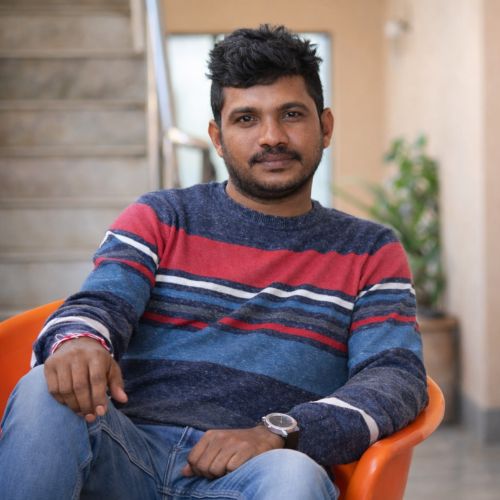
Koti Deva
Digital Marketing Specialist
Koti is a Digital Marketing Specialist with over 10 years of experience and the co-founder of MCQ Orbit — a free exam prep platform built for Indian competitive exam aspirants.
With strong personal knowledge in Quantitative Aptitude, Logical Reasoning, and Mathematics, Koti has a deep understanding of what it takes to crack exams like SSC CGL, IBPS PO, SBI Clerk, UPSC Prelims, NEET, and JEE. Having followed these exams closely for years, he understands the exact topics, patterns, and shortcuts that matter most.
MCQ Orbit was born from a simple desire — to build a platform where every aspirant in India can practice quality MCQs, read reliable current affairs, and prepare confidently, without paying a rupee. Koti combines his digital expertise with his passion for competitive exams to create content that is accurate, practical, and genuinely useful for students.
His mission is straightforward: if the right guidance had been freely available earlier, more students would have cracked their dream exams. MCQ Orbit is his way of making that happen.
Comments
No comments yet.