June 21 was a genuinely packed day for current affairs — and a meaningful one at that, given it is International Yoga Day, a day India can legitimately claim as its own contribution to the global calendar. But beyond the yoga mats and morning sessions at Rajpath, some big things happened. PM Modi commissioned three indigenous naval warships in Kolkata — a landmark moment for Indian shipbuilding. The NEET-UG re-examination was conducted across 5,440 centres for over 22 lakh students. Nine wildlife traffickers were arrested in Assam's Chirang district with eight golden langurs recovered. The ADB confirmed India remains its largest private-sector market with $1 billion in direct private financing planned for 2026. Iran closed the Strait of Hormuz again — citing violations of the June 15 ceasefire MoU — reigniting energy market fears. And informal workers across India started getting enrolled in parametric heat insurance as the summer heat crisis deepened. Let's get into all of it.
International Yoga Day — June 21
Yoga Day 2026 — "Yoga for Self and Society"
Every year on June 21 — the Summer Solstice, the longest day of the year in the Northern Hemisphere — the world observes International Day of Yoga. It was India's idea, India's proposal, and India's diplomatic achievement to make it happen. Back in September 2014, PM Modi proposed the idea at the United Nations General Assembly, and within three months — on December 11, 2014 — the UNGA adopted the resolution with a record 177 co-sponsoring nations. The first International Yoga Day was observed on June 21, 2015.
The 2026 theme is "Yoga for Self and Society" — moving beyond individual wellness into yoga's potential as a tool for community healing, stress management in conflict zones, and mental health resilience at a societal level. Given the geopolitical turbulence of 2026 — the West Asian conflict, economic pressures, and climate anxiety — the theme feels remarkably timely.
The main event this year was held in Srinagar, Jammu and Kashmir — with PM Modi leading the national celebrations at the Sher-i-Kashmir International Convention Centre, attended by thousands of participants on the lawns overlooking the Dal Lake. Choosing Srinagar carries deep symbolism — it is a statement of normalcy, of integration, and of cultural pride in a region that once saw decades of conflict.
A few things worth knowing about International Yoga Day for your exams: The resolution was passed under UNGA agenda item 123. The day coincides with the Summer Solstice — June 21 — which has significance across many world cultures and was chosen partly for that reason. In India, yoga's origin is traced to the Indus Valley Civilisation, and it is documented in ancient texts including the Rigveda, Upanishads, Bhagavad Gita, and Patanjali's Yoga Sutras. The Ministry of Ayush is the nodal ministry for International Yoga Day in India.
Defence & Security
PM Modi Commissions Three Indigenous Naval Warships in Kolkata — A Landmark for Indian Shipbuilding
This is one of the most significant defence stories of June 2026, and it happened on Yoga Day almost as a symbol of India's multiple strengths operating simultaneously.
Prime Minister Narendra Modi commissioned three indigenously built naval platforms in Kolkata — further cementing India's Maritime Amrit Kaal Vision 2047 target of becoming a top-five global shipbuilding nation. The commissioning ceremony was held at Kolkata's naval dockyard, with senior naval officers, defence officials, and shipbuilding representatives present.
The three platforms commissioned represent different capability domains — surface warfare, anti-submarine warfare, and maritime patrol — reflecting how India is building a layered, multi-domain naval force rather than focusing on any single capability. All three were built at Indian shipyards under the Buy Indian and Make in India categories, with high levels of indigenous content.
What makes this moment worth pausing on is the broader trajectory it represents. A decade ago, India was routinely criticised for glacial progress in defence manufacturing — ships ordered from Russian yards, submarines assembled under licence, barely any indigenous content in major platforms. The picture in 2026 is fundamentally different. INS Vikrant — commissioned in 2022 — was India's first indigenous aircraft carrier. The Project 75 submarines (Scorpene class) are being built at Mazagon Dock, Mumbai. And now three more warships joining the fleet simultaneously.
Why Kolkata? The Garden Reach Shipbuilders and Engineers (GRSE) in Kolkata is one of India's premier naval shipyards — responsible for building frigates, corvettes, fast patrol vessels, and fleet support ships. The choice of Kolkata for the commissioning ceremony also has political significance — it signals investment and national pride in a city and state that has historically been overlooked in defence-industrial conversations compared to Mumbai and Visakhapatnam.
The commissioning also aligns with India's MAHASAGAR maritime vision — ensuring India has the naval presence and capability to serve as a net security provider across the Indian Ocean Region.
Nine Wildlife Traffickers Arrested in Assam — Eight Golden Langurs Recovered
This story sat in the middle of wildlife and national security — and that combination is what makes it genuinely significant.
Nine wildlife traffickers, including a Bangladeshi national, were arrested in Assam's Chirang district. Eight golden langurs were recovered from the accused. The arrests pointed to an international trafficking network routing endangered primates through West Bengal to black markets abroad.
The Golden Langur (Trachypithecus geei) is one of India's most endangered primates. It is found only in a tiny geographic range — the forests of western Assam's Chirang, Bongaigaon, Barpeta, and Kamrup districts, and just across the border in Bhutan. Globally, the species is listed as Endangered on the IUCN Red List and receives the highest protection under Schedule I of India's Wildlife Protection Act, 1972 — which means offences involving it attract the most severe penalties.
The presence of a Bangladeshi national in the trafficking network is a red flag that this was not a local poaching incident — it was part of a cross-border criminal operation likely connecting to demand in Southeast Asian and Chinese markets, where exotic primates command extraordinarily high prices as pets or for use in traditional medicine.
The EU, Australia, and Japan had previously issued travel advisories against parts of Northeast India — including Assam — citing insurgency concerns dating back to 1979. The fact that all three have now lifted these advisories signals the dramatically improved security environment in the region — a relevant context for understanding why coordinated wildlife trafficking crackdowns in Chirang are now even possible.
International Affairs
Iran Closes Strait of Hormuz Again — Citing Ceasefire Violations
Just when global energy markets had started to breathe a little easier after the June 15 US-Iran MoU, things got complicated again.
Iran closed the Strait of Hormuz for the second time, citing violations of the June 15 ceasefire MoU — specifically Israel's continued strikes on Lebanon and its refusal to withdraw from southern Lebanon. Tehran called the closure the "first step" of its response to what it described as a "breach of trust."
To understand why this matters for India specifically — and for anyone watching global energy markets — consider this. The Strait of Hormuz is a narrow waterway between Iran and Oman, approximately 33 kilometres wide at its narrowest point. Through this strait flows roughly 20% of the world's traded oil and significant quantities of LNG. India imports approximately 85% of its crude oil, with a substantial portion transiting through Hormuz. Every time the strait is threatened or closed, India's energy import bill spikes, the rupee comes under pressure, and petrol prices at Indian pumps are pushed higher.
The June 15 MoU — which had provided a brief window of de-escalation — now looks fragile. Iran's position is that the ceasefire was a package deal that included Israeli military withdrawal from southern Lebanon, and Israel's non-compliance makes the whole agreement void from Tehran's perspective. This is the kind of multi-layered geopolitical conflict where a single decision in Tel Aviv has direct consequences for a family in Mumbai paying for cooking gas.
For India's foreign policy: The Strait of Hormuz closure also puts pressure on the India-Middle East-Europe Economic Corridor (IMEC) — the connectivity project announced at the G20 New Delhi Summit in September 2023 that routes goods from India through the Middle East to Europe. Any prolonged instability in the Gulf directly threatens IMEC's viability and timelines.
ADB Confirms India as Its Largest Private-Sector Market — $1 Billion in Direct Financing Planned
Here's a piece of economic news that deserves more attention than it typically gets.
The Asian Development Bank confirmed that India remains its largest private-sector market, with plans to provide around $1 billion in direct private-sector financing in 2026. The ADB also supported India with more than $4 billion in sovereign financing and over $1 billion in private-sector funding during 2025.
The ADB's key sectors in India include renewable energy, green hydrogen, electric mobility, green data centres, urban infrastructure, and financial inclusion. It has also partnered with Standard Chartered to strengthen supply-chain finance through GIFT City — India's International Financial Services Centre in Gandhinagar, Gujarat.
What is the ADB? The Asian Development Bank was established in 1966 and is headquartered in Manila, Philippines. Its mandate is to promote social and economic development in Asia and the Pacific. India has been one of the ADB's largest borrowers since the bank's early years — and the shift from being primarily a borrower to being the bank's largest private-sector market represents India's economic maturation. It signals that Indian private companies are now bankable at multilateral standards, attracting development finance for commercially viable projects rather than just sovereign-backed government schemes.
The GIFT City connection is worth noting separately — ADB partnering with Standard Chartered through GIFT City to strengthen supply-chain finance is one more validation of India's International Financial Services Centre as a genuine global finance hub rather than just a regulatory experiment.
Education & Governance
NEET-UG Re-Examination Conducted — 22 Lakh Students, 5,440 Centres, 51,311 Jammers
If you've been following the NEET-UG 2026 saga from May — the paper leak, the NTA controversy, the 22.79 lakh students facing re-examination — today was the day they finally got to sit the exam again.
Over 22 lakh aspirants took the NEET-UG 2026 re-examination on June 21 across 5,440 centres in 551 cities and 14 centres abroad, after the May 3 test was cancelled over paper-leak allegations.
The scale of the security deployment for this re-examination was extraordinary — and genuinely unprecedented in the history of Indian competitive examinations. Each of the exam rooms had CCTV coverage, with feeds monitored simultaneously at centre, state, and national ministry levels. 51,311 jammers were deployed to prevent electronic devices from transmitting signals inside exam halls. Two invigilators were stationed per room. Biometric verification was done by 48,448 dedicated personnel. Frisking was handled by 38,795 dedicated staff. Paramilitary forces, the Indian Air Force, local police, and postal department personnel were all involved in the logistics chain.
This level of security deployment tells you something important — not just about how seriously the government took the re-examination, but about how deeply the original leak had shaken public confidence in India's examination system. When you need paramilitary forces and air force logistics to conduct an undergraduate medical entrance test, something has gone fundamentally wrong with how India manages high-stakes testing.
The NTA also took active steps against misinformation — monitoring social media for fraudulent "paper leak" claims during the examination, which had become a new kind of disruption tactic after the May 3 incident.
Climate & Health
Parametric Heat Insurance for Informal Workers — A Policy Innovation Worth Understanding
This is one of those quiet policy stories that doesn't get big headlines but could matter enormously for millions of people.
As India faces above-normal heat, informal workers are being enrolled in parametric heat-insurance schemes that pay out automatically when temperatures cross a threshold. Unlike traditional insurance where you file a claim after proving a loss, parametric insurance triggers a payment automatically when a pre-set weather index — temperature, humidity, AQI — crosses a threshold. No paperwork. No claims process. No delays.
Here's how it works in practice. Under the Jan Sahas scheme, 3,925 informal workers across Delhi-NCR were enrolled with Go Digit and Godrej Properties' CSR arm. Last year, 722 workers in Noida received ₹1,000 automatically when the temperature trigger fired. Under SEWA's programme — one of the largest of its kind in the world — the scheme grew from 21,000 women in Gujarat in 2023 to approximately 2.25 lakh women across seven states by 2025, paying out when temperatures exceed 40°C.
Why this matters: Construction workers, agricultural labourers, street vendors, domestic workers — India's 450+ million informal workers have no sick leave, no paid time off, and no safety net when extreme heat forces them to stop working. A heatwave doesn't just make them uncomfortable — it cuts their daily income to zero while exposing them to heat stroke risk. Parametric insurance directly addresses this gap in a way that the existing formal welfare system simply cannot reach fast enough.
The gap that stands out is this — not a single state government currently runs a heat insurance scheme for workers. Nagaland's parametric policy against excess rainfall is the lone government-run parametric insurance scheme in the country. Everything else is being driven by NGOs, CSR funds, and private insurers. For a country that just crossed 520 GW of installed power capacity and is the world's third-largest renewable energy producer, the absence of government heat insurance for vulnerable workers is a significant policy blind spot.
Environment & Biodiversity
BRICS Energy Ministers' Meeting — Gurugram, June 25-26
India will host the 11th BRICS Energy Ministers' Meeting in Gurugram on June 25-26, 2026, under its BRICS Chairship. The theme is "Energy for All" — covering energy security, sustainability, access, and innovation across the BRICS+ grouping of 11 nations.
This meeting is significant because BRICS now represents nearly half the world's population and around 40% of global GDP — and energy is the single most contested policy domain across these nations right now, given the West Asian crisis. India will use this platform to showcase the International Solar Alliance and the Global Biofuels Alliance — two India-initiated multilateral frameworks that position India as a global leader in clean energy transition.
The discussions will span renewable energy deployment, energy transition pathways, smart grids, energy storage, and equitable access — essentially trying to find common ground between nations as different as China (the world's largest renewable energy investor) and Iran (heavily dependent on oil revenues) and India (navigating between its coal-heavy present and its clean-energy future).
IIT Delhi Study — Aerosols Suppress Monsoon Rainfall Over India
A research study from IIT Delhi found that many aerosols scatter sunlight, exerting a cooling effect and suppressing rainfall over India. This adds an important layer to understanding why India's monsoon patterns have become more erratic in recent decades.
Aerosols — tiny particles suspended in the atmosphere from sources including industrial emissions, vehicle exhaust, crop residue burning, and dust — affect rainfall in two ways. They scatter incoming solar radiation, cooling the surface and reducing the thermal gradient that drives monsoon circulation. They also act as cloud condensation nuclei, changing cloud droplet size and affecting how much rain actually falls.
The IIT Delhi finding is particularly relevant in the Indian context because the Indo-Gangetic Plain — where aerosol concentrations are among the world's highest due to stubble burning, dense traffic, and coal-based industry — is also where monsoon rainfall variability has been most pronounced. Understanding the aerosol-monsoon link is essential for improving IMD's seasonal forecasting models and for designing targeted air quality interventions that serve both public health and climate goals simultaneously.
Governance & Policy
BRICS NSA Meeting — New Delhi, June 22-23
Just before the Energy Ministers' Meeting, India hosted the BRICS National Security Advisers Meeting on June 22-23, 2026, under the chairmanship of NSA Ajit Doval — covering the full spectrum of security issues facing BRICS nations in 2026.
The timing — with the Strait of Hormuz crisis reigniting, the West Asian conflict deepening, and cybersecurity threats escalating — made this one of the most consequential BRICS NSA meetings in years. Terrorism financing, maritime security, and emerging technology risks (particularly AI-enabled disinformation) were reported as key agenda items.
NSA Ajit Doval's chairmanship carries weight — he has been India's National Security Adviser since 2014 and is one of the most experienced intelligence and security hands in the world. His framing of the discussions would have shaped how BRICS collectively approaches security governance ahead of the Leaders' Summit in September 2026.
FAQs — 21 June 2026 Current Affairs
Q. When was International Yoga Day established and why is June 21 chosen?
International Yoga Day was established by the UN General Assembly on December 11, 2014, following PM Modi's proposal at the UNGA in September 2014 — with a record 177 co-sponsoring nations. June 21 was chosen because it is the Summer Solstice — the longest day of the year in the Northern Hemisphere — which has cultural significance across many civilisations. The first Yoga Day was observed on June 21, 2015. The 2026 theme is "Yoga for Self and Society." The Ministry of Ayush is the nodal ministry in India.
Q. What is the Golden Langur and why are the Assam arrests significant?
The Golden Langur (Trachypithecus geei) is one of India's most endangered primates — found only in western Assam's forest districts and parts of Bhutan. It is listed as Endangered on the IUCN Red List and under Schedule I of India's Wildlife Protection Act 1972, giving it the highest legal protection. The arrest of nine traffickers including a Bangladeshi national in Chirang district, with eight langurs recovered, points to a cross-border international trafficking network — likely supplying demand in Southeast Asian or Chinese markets for exotic pets or traditional medicine.
Q. Why did Iran close the Strait of Hormuz again after the June 15 MoU?
Iran cited "violations" of the first clause of the June 15 MoU — specifically Israel's continued strikes on Lebanon and its refusal to withdraw from southern Lebanon, which the ceasefire was meant to cover. Iran called the closure the "first step" of its response to what it described as a "breach of trust." This matters enormously for India, which imports approximately 85% of its crude oil with a significant share transiting through the Strait.
Q. What is parametric heat insurance and how is it different from regular insurance?
Parametric insurance pays out automatically when a pre-set trigger — like temperature crossing 40°C — is met, without requiring the policyholder to file a claim or prove a loss. This makes it ideal for informal workers who have no time, literacy, or institutional access for traditional insurance claims. India's Jan Sahas scheme covers workers in Delhi-NCR; SEWA's programme covers 2.25 lakh women across seven states. No state government currently runs a heat insurance scheme — all existing programmes are NGO or CSR-driven.
Q. What is the ADB's relationship with India in 2026?
The Asian Development Bank — established in 1966, headquartered in Manila — confirmed India as its largest private-sector market, planning $1 billion in direct private-sector financing in 2026. In 2025, the ADB supported India with $4 billion+ in sovereign financing and $1 billion+ in private-sector funding, focusing on renewable energy, green hydrogen, electric mobility, urban infrastructure, and financial inclusion. The ADB-Standard Chartered partnership through GIFT City for supply-chain finance is a notable new initiative.
Q. What made the NEET-UG re-examination on June 21 different from the original May 3 test?
The re-examination deployed an unprecedented security architecture — 51,311 jammers, CCTV in all exam rooms with feeds monitored at centre, state, and national levels, two invigilators per room, 48,448 biometric verification staff, 38,795 frisking personnel, and involvement of paramilitary forces, Indian Air Force, police, and postal departments across 5,440 centres in 551 cities. The NTA also actively monitored social media for fraudulent paper-leak claims during the exam.
Written by
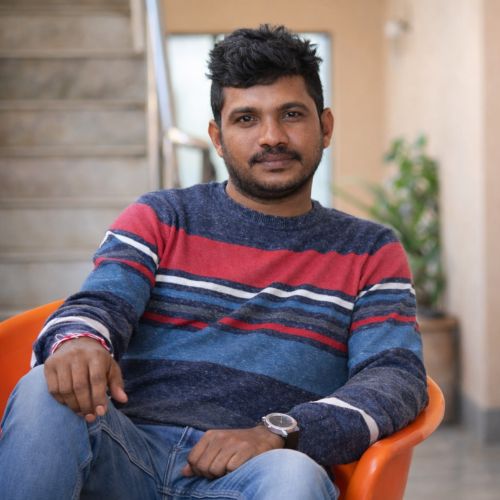
Koti Deva
Digital Marketing Specialist
Koti is a Digital Marketing Specialist with over 10 years of experience and the co-founder of MCQ Orbit — a free exam prep platform built for Indian competitive exam aspirants.
With strong personal knowledge in Quantitative Aptitude, Logical Reasoning, and Mathematics, Koti has a deep understanding of what it takes to crack exams like SSC CGL, IBPS PO, SBI Clerk, UPSC Prelims, NEET, and JEE. Having followed these exams closely for years, he understands the exact topics, patterns, and shortcuts that matter most.
MCQ Orbit was born from a simple desire — to build a platform where every aspirant in India can practice quality MCQs, read reliable current affairs, and prepare confidently, without paying a rupee. Koti combines his digital expertise with his passion for competitive exams to create content that is accurate, practical, and genuinely useful for students.
His mission is straightforward: if the right guidance had been freely available earlier, more students would have cracked their dream exams. MCQ Orbit is his way of making that happen.
Comments
No comments yet.